What is a comment-to-get strategy, and how can it help you grow your email list?

 MailerLite's legal team.
You've probably seen them on Instagram and LinkedIn: posts with a caption that asks the audience to comment on the post in exchange for a link or resource.
This is known as a comment-to-get strategy, and it’s an effective way to turn social followers into email subscribers.
If you're wondering why exactly people do this, and—more importantly—whether it can help you grow your business, this article is for you.
What is a comment-to-get strategy?
A comment-to-get strategy is an email list growth tactic where creators offer valuable lead magnets like PDFs, checklists, discounts or e-books to their social media followers on platforms like Instagram and LinkedIn in exchange for their email address.
Instead of including a link to the resource in the post caption, they ask followers to leave a specific comment (such as "Growth" or "eBook") to signal that they want to receive the content. The creator then sends a link to the lead magnet’s sign-up page via DM, where they can enter their email to receive the resource.
The strategy is an effective way to move your audience from a social platform into your email marketing funnel. This is important because once someone joins your email list, you get a direct connection with them that you can turn into sales.
You can also use this strategy to grow your follower count on the social platform by asking people to follow you and comment on the post.
Example: Food for Fitness’s Instagram comment-to-get strategy
Scott Baptie, founder of Food For Fitness, uses an Instagram comment-to-get DM strategy to turn social media attention into long-term customers.
His process is straightforward:
He creates content related to the lead magnet and shares it on Instagram.
He asks people to comment with a keyword to get the resource.
He directs commenters to a MailerLite landing page where they can swap their email address for a free e-book.
See an example post below.
Once a follower signs up, they are automatically entered into a nurture sequence of 5 to 6 emails. This sequence builds trust by explaining the brand's philosophy and sharing high-value content before eventually directing them to download the app.
Why comment-to-get link strategies work
Comment-to-get strategies can be effective since they overcome several of the barriers that social media sites use to stop you from turning audiences built on their platforms into owned email lists.
Here’s a look at why they work and why many creators choose this approach:
Platform limitations make linking to external content difficult
Instagram doesn't allow clickable links in post captions. When you direct people to "click the link in bio," you're asking them to leave your post, navigate to your profile, and hunt for the link. This creates friction that reduces the likelihood of people downloading the content.
But, if you ask them to comment on the post, they can do it without ever leaving the page. It's a more more straightforward process.
Algorithm concerns around external links
While you can add links to LinkedIn and X, many creators worry that since these platforms want people to stay in their apps, the algorithms deprioritize posts containing external links.
There is some evidence that this isn’t as big an issue as people think. Both LinkedIn’s Director of Platform Rishi Jobanputra and X’s head of product Nikita Bier have said that as long as the content in the posts stands up on its own, adding a link won’t immediately cause lower reach.
Despite this, the worry remains that posts with links are deprioritised.
Comments boost post visibility
Whether or not algorithms reduce the reach of posts with links, one thing is for sure: Social media algorithms love engagement.
When dozens of people comment on your post, the platform interprets it as valuable content and pushes it to a wider audience, increasing your reach exponentially. Comment-to-get strategies are an effective way to encourage these visibility-boosting comments.
How to use the comment-to-get strategy to grow your list
Ready to implement this strategy? Here's how to set up your first comment-to-get campaign:
1. Create a high-value lead magnet
The success of your entire campaign hinges on the perceived value of your lead magnet. If people don’t want it, they won’t comment on your post.
With that in mind, the offer must solve a specific, pressing problem for your target audience. This could be a checklist, template, guide, or e-book. You could even try offering a discount code or a coupon.
If you have existing lead magnets, choose one that historically performs well and create relevant content to promote it. Check out the performance of your forms, pop-ups and landing pages to see which ones have the highest conversion rate.
If you don’t have lead magnets, follow people in your industry to see the kinds of content that they share.

2. Build your landing page
Use MailerLite to create a landing page where people can exchange their email address for your lead magnet.
Since people visiting the page have already requested the lead magnet, you can keep the landing page simple. Just add some basic information about the lead magnet contents and include a signup form that asks for the visitor’s email address.
Once you have a design that you like, you can easily duplicate it to use across multiple lead magnets.
Here are some templates you can use to get started:
3. Craft your social media post
There are 2 ways to create your posts. First is to create content that stands on its own but is relevant to the lead magnet. You can then add a CTA asking people to comment to get the resource.
Alternatively, create a post that specifically promotes the resource. Write a caption that highlights its benefits and the problem it solves. Focus on the outcomes that it will help the reader achieve, rather than features.
Finally, add clear instructions that tell people exactly what to comment to receive the resource. Use phrases like "Comment 'GUIDE' below and I'll send you the link!" or "Type 'READY' and I'll DM you instant access."
4. Send the link via DM
When someone comments, send them a direct message with the link to your landing page. Respond promptly to maintain momentum.
Also consider replying to all comments on the post for an extra bit of algorithm-boosting engagement.
5. Nurture your new subscribers
Someone joining your list is just the beginning. Now you need to start the process of turning them into customers.
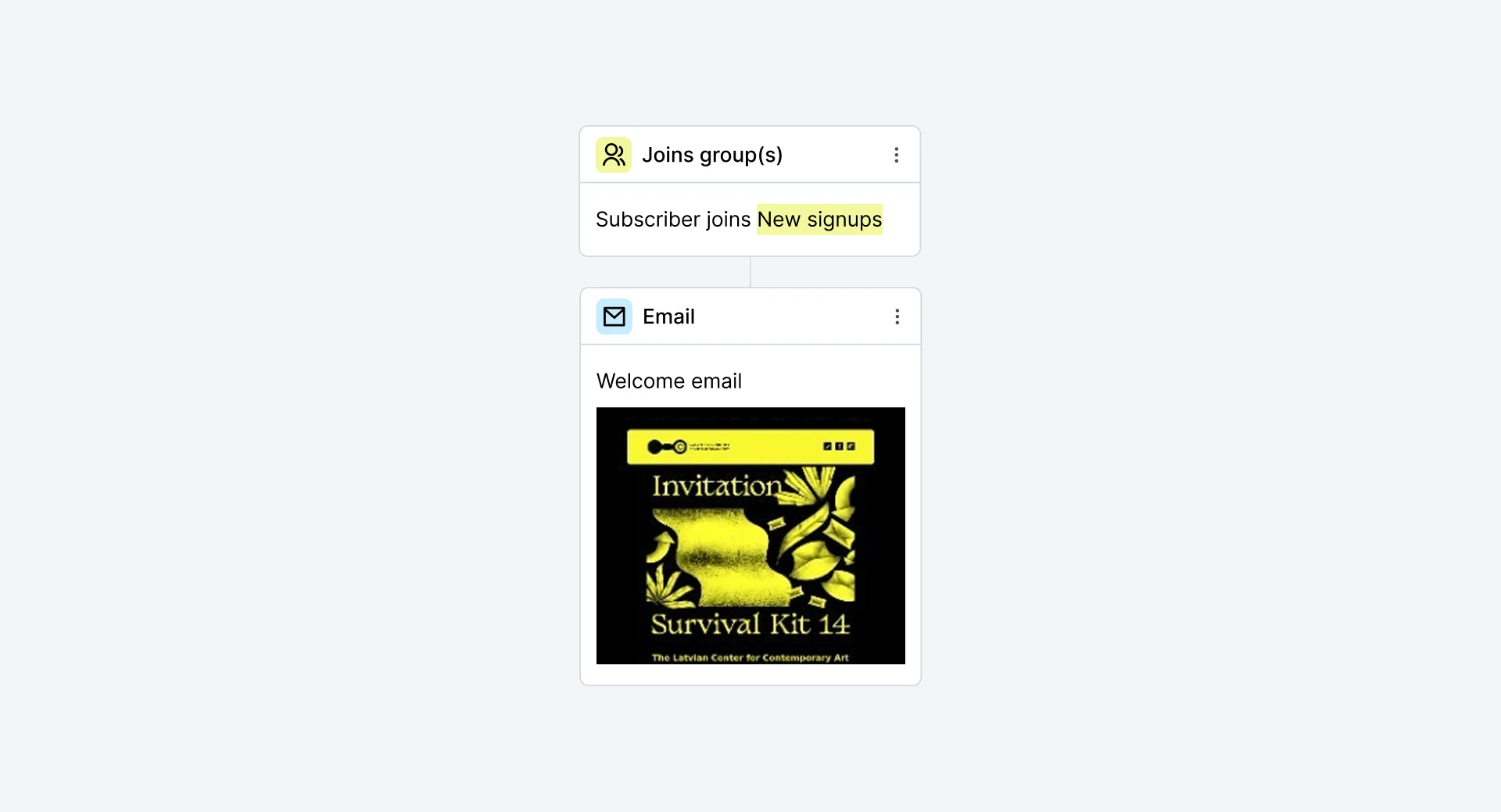
A good way to begin is to create an automated welcome email sequence that delivers the lead magnet and builds a relationship over time. Get started in a flash with the welcome email automation template below.
Should you use a DM automation tool?
If you have a massive following, replying to hundreds of comments manually is impossible. This is where DM automation tools like Manychat come in. These tools can automatically detect a specific keyword and send a pre-written DM to the user instantly.
Consider using one if you have a large following or you're running paid ads that generate high volumes of engagement. Automating the commenting process can save you hours of manual work and ensure no one slips through the cracks.
DM automation tools are also useful if you don’t have time to keep an eye on your post, but you still want to respond to commenters immediately.
But, if you're just starting out or have a smaller, engaged community, it’s totally fine to send your DMs manually.
In fact, sending manually can be a more effective strategy since it allows you to start genuine conversations with followers, answer questions, and build authentic relationships. Plus, you'll save on the app’s monthly subscription cost.
Our take: Use a comment-to-get strategy if you're confident on social media
The comment-to-get strategy is a powerful tool for anyone confident in their social media presence, but it’s important to understand the trade-offs before diving in.
On the positive side, it is one of the most effective ways to bypass the "link in bio" friction. By encouraging a high volume of comments, you aren't just sending people to your email list; you’re also triggering the platform's algorithm to show your content to a much wider audience.
This creates a virtuous cycle where high engagement leads to more visibility, which in turn leads to more subscribers.
However, if overused, this tactic can start to feel repetitive or "spammy" to your core followers. Our content writer, Kasturi said that she feels that some creators she follows overuse the tactic.
It's annoying when people do it for the wrong reasons. And some creators overuse it, especially on Instagram
Plus, if you don't use automation and one of your posts takes off, the manual labor of replying to every comment and sending individual DMs can quickly become a full-time job.
Although that’s potentially a very nice problem to have!