9 Email games to win your subscribers’ hearts (and clicks!)

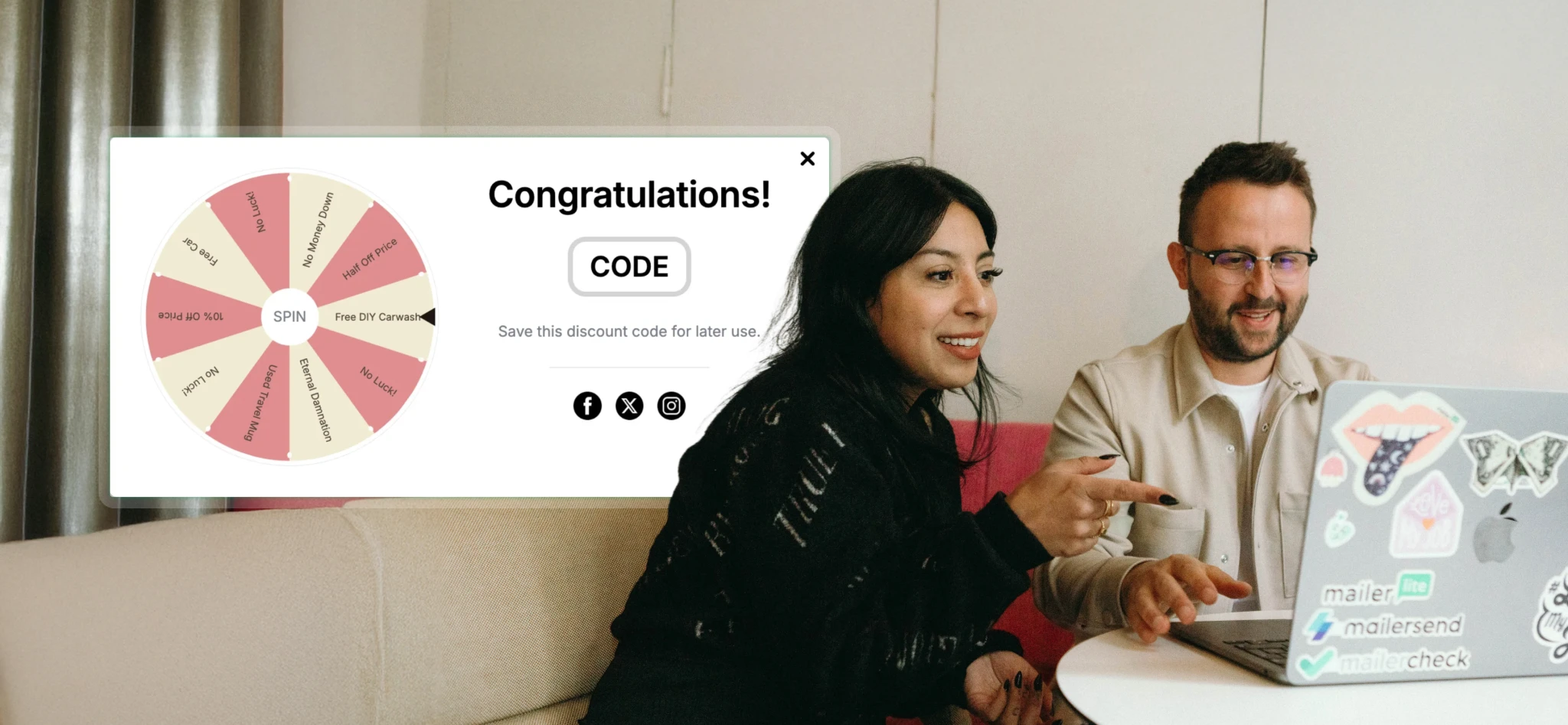 Team members Harmony and Arnold.
If you’re looking to boost engagement, keep subscribers hooked like a fairground duck, and inject some fun into your campaigns, then adding email games to your newsletter might be the prize-winning strategy you’re after.
What’s more memorable? A block of text saying “here’s your discount code”, or an interactive element that encourages you to click and play to win your prize? When an email taps into our playful side, it’s much more likely to make a lasting impression.
And that’s where email gamification comes in. It not only makes your campaigns stand out, but it also ensures higher engagement (plus, your brand can let its fun side out!). And that’s precisely why more and more brands are implementing gamification into their products, apps and marketing initiatives.
In this article, we’ll explore what email gamification is, the psychology behind why it works so well, the types of email games you can use, and best practices for effective campaigns. Let the games begin!
What exactly is gamification in email?
Email gamification, or email games, is the concept of adding game elements to your campaigns. The goal is to increase engagement by making your emails more interactive, triggering subscribers' urge to play, compete or win so that they click on your email or perform another desired action.
An email game can be more sophisticated and complex, like an embedded spin-the-wheel or scratch card, or more simple, like an email treasure hunt or quiz.
Why you should use gamification in emails
There is clear evidence to show that gamified experiences increase engagement and ROI. (That’s why the gamification industry is booming: it’s on track to reach a market size of $36.5 billion in 2026, and $112.3 billion by 2031!) How does this translate to email? Let’s have a look.
1. It increases opens and clicks
Case studies have shown that just using the word game in your subject line can increase open rates by 25%, while gamification can boost Click-to-open rates (CTOR) by 220% (Stripo). Gamifying the experience makes it more interactive and engaging, plus our brains are wired to seek rewards, giving email subscribers more reason to open and click.
2. It boosts conversion rates
Gamified elements drive subscribers toward a desired action in a more fun, engaging and rewarding way. For example, instead of sharing a simple discount code, by using a spin-the-wheel game, the discount (prize/reward) feels more personal. It taps into the reward center of the brain that’s activated when we personally achieve something. What’s more, by giving rewards, you introduce a sense of urgency—no one wants to win something only to miss the chance to claim it.
The result is more conversions and increased ROI. And here’s another Stripo stat to back that up: they found that e-commerce businesses can increase ROI by as much as 225% with gamification. Not bad!
3. It makes your campaigns stand out in the inbox
Let’s face it—inboxes are pretty crowded these days. Adding games to your email marketing campaigns makes them way more memorable by turning subscribers into active participants instead of passive readers. This results in a more emotional connection and stronger brand recall that gets subscribers actually looking for your emails rather than simply stumbling upon them.
4. It increases customer loyalty
Games bring about positive emotions that subscribers will then associate with your brand. It’s kind of like Pavlov’s bell, but with emails. Subscribers will be conditioned to associate your interactive emails with a positive, fun brand experience, so they’ll look forward to your messages and continue to engage.
5. It encourages sharing (and increases brand awareness)
Every December, people anticipate the release of personalized “wrapped” recaps for their favourite apps and services, so they can check their stats, see what percentile they are in for certain activities, and, for many, share their results. It’s a year-long game where the winner gets to say they are the biggest metal fan at the end of it.
People love to share their wins and outcomes. By making your email game sharable, you can drive organic reach beyond your email list, increase your brand awareness, and even boost the chances of virality.
The psychology of play: Why email gamification works
When we win a prize, reach a milestone, or earn a reward, it induces a positive emotion. And that’s because each time it happens, there’s a release of dopamine. Dopamine is a neurotransmitter associated with pleasure and satisfaction, and as humans, we’re constantly chasing these feelings.
Email gamification works because it taps into this dopamine reward system, keeping people interested and engaged. Once a person experiences the dopamine rush associated with playing a game or winning a prize, they’re more likely to repeat the behavior to get that same dopamine rush again.
And there are other psychological factors at play, too:
Competition
Humans are competitive by nature. Adding an element of competition (or perceived competition) in email games motivates subscribers to engage by encouraging them to compete with one another.
Extrinsic motivation
Extrinsic motivation is the outside factors that motivate us to do something. It doesn’t override intrinsic motivation (which is the internal motivation to do something); instead, it reinforces it to encourage deeper, more consistent engagement through external rewards.
Achievement
When we win something in a game or score points, it appeals to our desire for validation and accomplishment. It feels good to do well! Gamification turns email campaigns into an active experience instead of a passive one, meaning that subscribers participate in the outcome. This makes it feel more personal and more like an achievement that was earned rather than something that was simply given.
9 email gamification strategies for better engagement
Ready to turn your email campaigns into playful, interactive experiences? Here are 9 games you can add to your emails today.
1. Quizzes and polls
Interactive quizzes are easy to implement (especially with MailerLite’s drag-and-drop quiz block!) and a fun way for your subscribers to engage with your brand by testing their knowledge. You can appeal to subscribers’ sense of achievement by showing them the results and even sharing top scores in your next newsletter for a bit of social recognition!

Polls are another way to encourage subscribers to engage with your campaigns, and they also allow you to gather insights about your audience that you can use to optimize your email marketing strategy. They work because not only do they allow subscribers to participate by having their vote, but they can also see how they fit in with the rest of your audience.
For MailerLite user Cienna Roget of Festivals at Sandpoint, using the survey feature to poll subscribers was a simple yet highly effective way to increase the engagement of her campaigns.
When I first upgraded, I loved the survey feature. Before we announced the concerts, I asked which acts people wanted to see and there were so many responses. I loved seeing this interaction. And I can use the answers to create segments.
Check out the video tutorial below to see just how easy it is to use MailerLite’s survey and quiz blocks.
2. Spin the wheel games
Instead of just sending your subscribers a simple coupon code, let them play to be in with a chance to win from a variety of discounts or prizes. Spin the wheel is a roulette-like game that makes winning a discount more fun for subscribers while also allowing you to control the volume of high-percentage discounts that you give away. This builds excitement about the possibility of winning a bigger discount, without requiring you to break the bank to do it.
In MailerLite, you can use the Spin the wheel pop-up to collect newsletter signups. The gamification of the signup form, plus the incentive of a discount prize, makes joining your email list more enticing.
Check out our spin the wheel templates below.
3. Scratch cards
The fun of scratching to reveal a prize has gone digital. Scratch cards appeal to people’s curiosity; if they want to see the reward hidden beneath, they need to interact with your email to do it! Scratch cards are a more interesting and entertaining way to promote your sales and offer exclusive discounts to loyal customers.
You can send a single scratch card with a reward or even send a series of scratch cards over a number of days, each with different prizes or freebies. For example, a 12 days of Christmas advent calendar or a Black Friday week daily offer. You can also use scratch cards to make announcements more fun and interactive. A few simple ideas include using scratch cards to reveal giveaway winners, answers to riddles or quizzes, and new product launches.
Embedded scratch cards require coding to add them to your emails, and you can use the MailerLite Scratch Card Code Generator to customize your game and get the code to copy into your email template or landing page.
In fact, here’s a scratch card we made with the builder. Go ahead and test it out!

|
Want to create your own free scratch card code?
Get your own scratch card generator to create your custom scratch card and then follow the instructions to add it to your email template.
4. Treasure hunts
Send subscribers on a World Wide Web treasure hunt where they have to follow your clues to win a prize. You can make this super simple, directing people with your clues toward a final answer that unlocks a reward, or automate the process by triggering email clues when they complete each step.
5. Progress and loyalty rewards (Points, badges and leaderboards)
Dial into subscribers’ desire for recognition and achievement by giving points and awards for specific actions, and share your most loyal and active subscribers on a leaderboard. This type of gamification is often in the form of loyalty programs where people receive points or rewards depending on their level of activity, such as purchases, referrals, or progress through different levels (for example, in an online course).
You can then allow customers to exchange points for money-off vouchers, discounts or other freebies as an incentive to continue engaging with your brand.
6. Community challenges
Community challenges drive engagement through 2 approaches: by helping and encouraging subscribers to achieve something, and by igniting their competitive streak against others in the community. They are great for learning and tackling difficult challenges because they break concepts down into more manageable parts, and allow people to track their progress and feel a sense of accomplishment at the end.
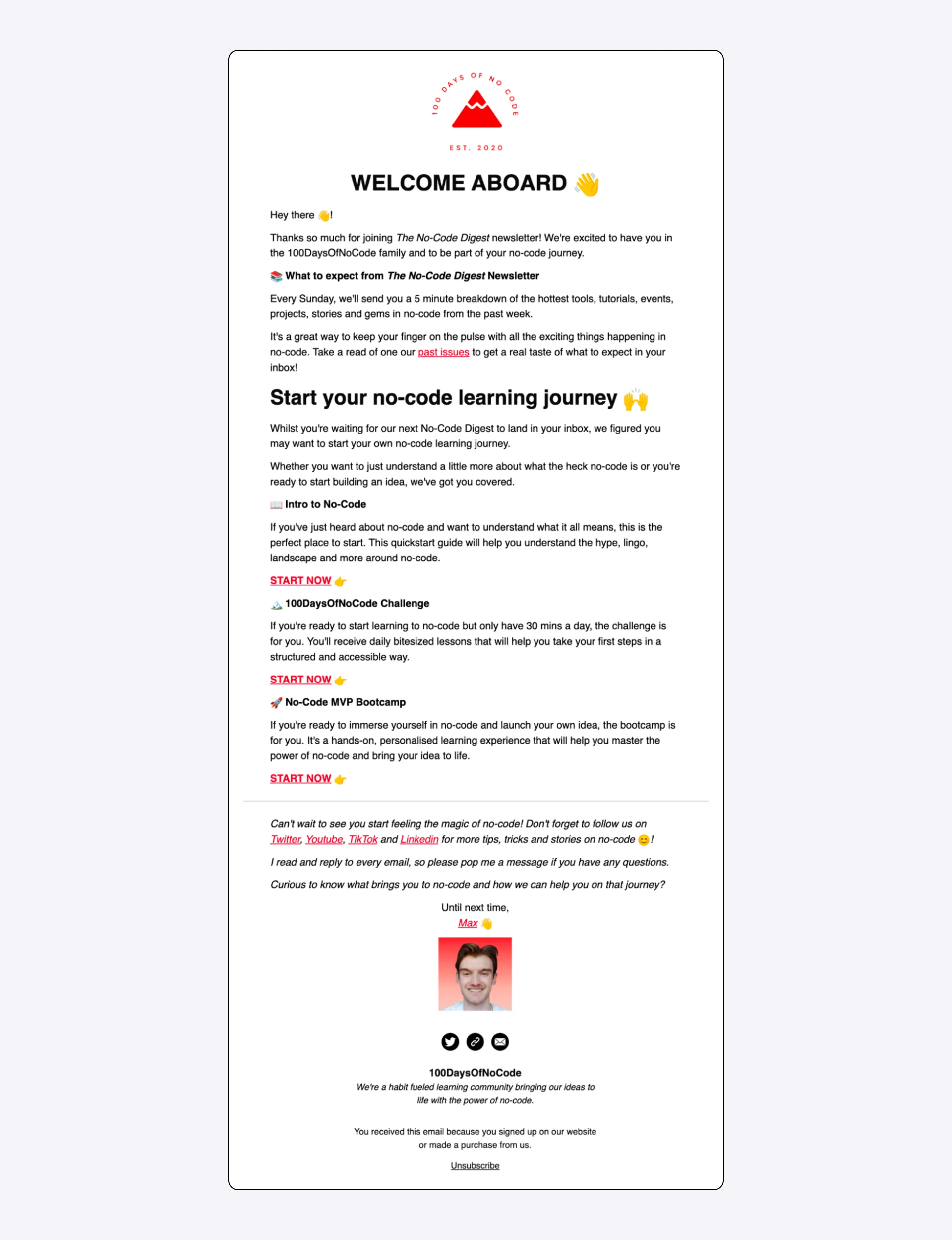
100school (formerly 100DaysofNocode) built its entire education platform on this approach. Founder Max Haining began his journey by inviting others to join in on the challenge of learning no-code software development in 100 days. This evolved into 100school, which offers 100-day email courses that teach tech literacy with fun daily tasks that take just 30 minutes to complete. They now have over 41,000 people who have completed their email courses.
7. Riddles
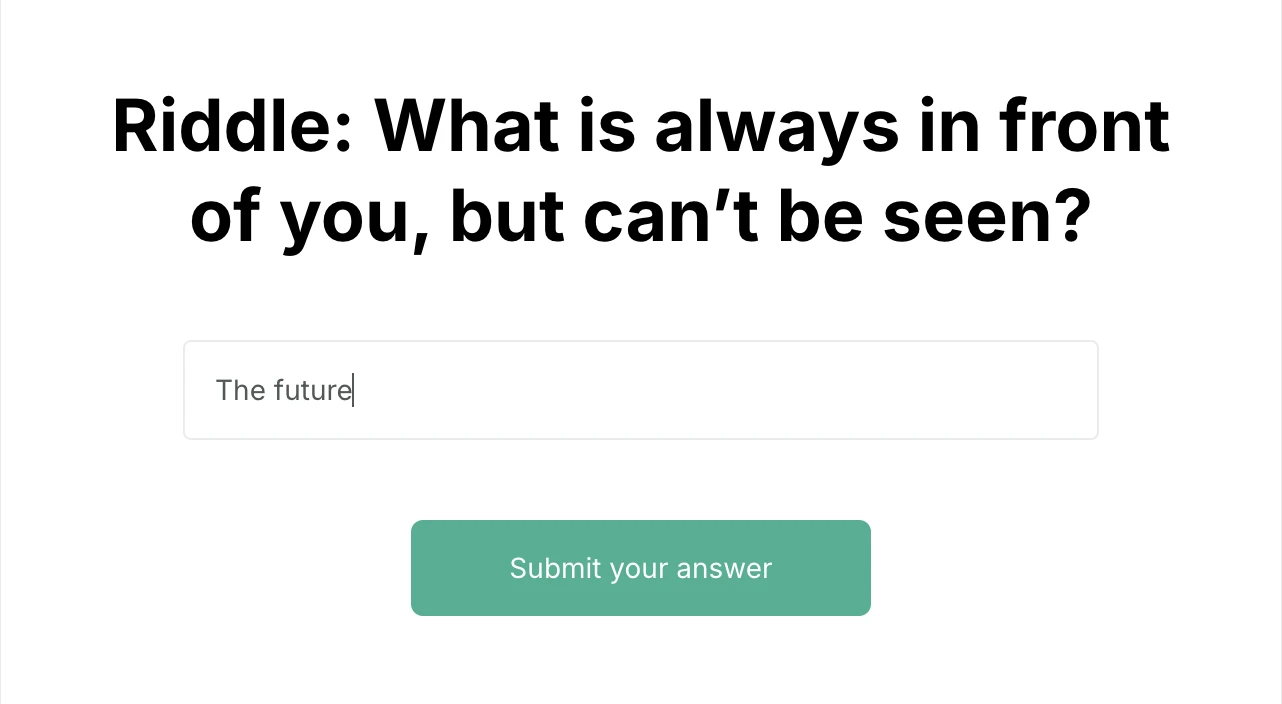
Who can resist a good riddle? Turn your emails into mini-brain teasers with a weekly or monthly riddle. Instead of just skimming your content, riddles invite subscribers to slow down and engage.
This is a much more lightweight way to create gamified email campaigns, but it still encourages people to engage with your brand and makes your emails more memorable. You can ask people to reply to your email or submit their answer via a survey block, and then share the solution and fastest riddle solver in your next newsletter.
8. Bingo cards
Bingo cards allow you to increase engagement by creating a playful challenge while also encouraging subscribers to complete multiple actions. It involves presenting these actions in a bingo-style grid that they can interact with (usually by clicking a link). If they complete all of the actions, bingo! They win a prize.
Some actions you could include are opening the email, clicking a link, answering a poll or survey, and visiting a specific page. You can then create an automation so that when all of these conditions are met, they receive a winner's email with their prize.
Here’s a simple example that we created using the Code block in the MailerLite Drag and drop builder. You could tailor the bingo card to match your brand design and add more grid items. Or, to really take it up a notch, you could create a landing page for the bingo card so that you can use JavaScript and make it more interactive.
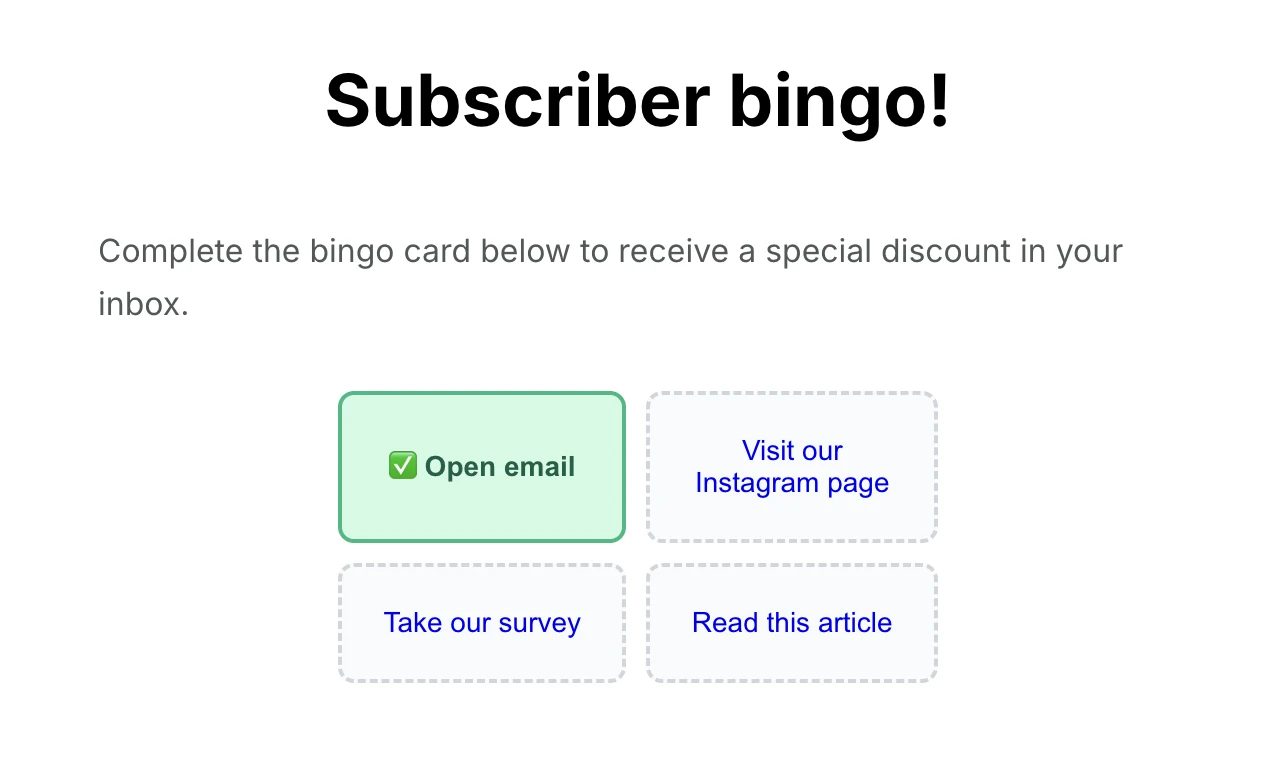
If you want to add something similar to your emails using MailerLite, you can use the code we used for the example above and customize it. To do this:
1. Create a campaign in the Drag & drop builder.
2. Add the Code block from the Blocks menu by going to Special, selecting the Code block and then dragging it into place.
3. Select the block in your email and paste the following code into the custom HTML code settings on the right-hand side and customize the design and bingo sections. Then click Save settings!
<!-- Bingo Card -->
<table role="presentation" width="100%" cellpadding="0" cellspacing="0" style="max-width:320px;margin:0 auto;border-collapse:separate;border-spacing:10px;">
  <tr>
    <!-- Completed item -->
    <td align="center" valign="middle"
        style="background-color:#D1FAE5;
               border:2px solid #10B981;
               border-radius:8px;
               padding:20px;
               font-family:Arial, sans-serif;
               font-size:14px;
               font-weight:bold;
               color:#065F46;">
      ✅ Open email
    </td>

    <!-- To-do item -->
    <td align="center" valign="middle"
        style="background-color:#F9FAFB;
               border:2px dashed #D1D5DB;
               border-radius:8px;
               padding:20px;
               font-family:Arial, sans-serif;
               font-size:14px;
               color:#374151;">
      <a href="https://www.instagram.com/">Visit our<br>Instagram page</a>
    </td>
  </tr>

  <tr>
    <!-- To-do item -->
    <td align="center" valign="middle"
        style="background-color:#F9FAFB;
               border:2px dashed #D1D5DB;
               border-radius:8px;
               padding:20px;
               font-family:Arial, sans-serif;
               font-size:14px;
               color:#374151;">
      <a href="https://survey.com">Take our survey</a>
    </td>

    <!-- To-do item -->
    <td align="center" valign="middle"
        style="background-color:#F9FAFB;
               border:2px dashed #D1D5DB;
               border-radius:8px;
               padding:20px;
               font-family:Arial, sans-serif;
               font-size:14px;
               color:#374151;">
                              <a href="https://www.mailerlite.com/blog">Read this article</a>
    </td>
  </tr>
</table>
9. Easter eggs
Easter eggs are hidden surprises in your emails that can reward subscribers for their attention to detail, or just add a little fun to your campaigns! Think hidden links and words, tiny icons, coded phrases, and surprise clickable images that lead to a landing page with a discount code.
When interesting and relevant easter eggs become a part of your campaigns, they encourage subscribers to pay more attention to your emails instead of skimming, ensure repeat opens, and make your brand feel more fun and human.
Essential elements and best practices for email games
Ready to build your game plan? Let’s break down the approach with some tips and best practices for more effective email gamification.
1. Set clear goals
Think about what you want your subscribers to do and make this the goal of your game. When you have a goal in mind, it will be easier to decide on the type of email game you want to use. Some goals to think about include:
Increased engagement (opens, clicks, replies)
Increased conversions
Improved deliverability
Better customer relationships and loyalty
Drive traffic to other channels, such as social media or a website page
Collect feedback or insights
Reduce unsubscribes
2. Tailor games to your target audience
Before you implement any games into your campaigns, you need to have a solid understanding of who your audience is and what type of content will resonate with them. A spin the wheel game will be less likely to strike a chord with an audience of developers, while a weekly coding challenge will be much more appealing.
3. Consider your available resources
Some types of email gamification elements will require special blocks or coding to make them work. Check out the limitations of your email builder and think about whether you have the right tools and technical expertise to implement different types of games.
Remember, emails are more limited than websites in what they can display and how interactive they can be—they don’t support JavaScript or real-time interactivity, meaning for this kind of content, you’ll need to direct people to a landing page. For in-email games, stick to pre-rendered states, conditional content and automation.
MailerLite has one of the most feature-rich drag and drop builders, with 70+ content blocks, including interactive content and a Code block for custom content, plus an HTML template builder to build your templates completely from scratch.
4. Keep it simple
Don’t make it too difficult for subscribers to engage with your emails and play your games. The game rules or instructions should take just a few seconds to understand. If it takes too long to figure out how to play, people will be less likely to take part.
5. Make it worthwhile
The whole point of email gamification is to trigger the brain’s reward center so that participation feels worthwhile. If you’re feeling generous, then a discount or freebie is great, but rewards can also be intangible, such as feedback, recognition, badges, and shoutouts.
You can also reward consistency by tracking subscribers who interact with your games and providing their “play streak” every time you send a new one.
6. Ensure your emails are accessible
Email accessibility is a hot topic. Aside from alienating subscribers with physical or cognitive disabilities that affect how they consume emails, failing to adhere to accessibility guidelines can also result in non-compliance with standards such as the Web Content Accessibility Guidelines (WCAG). You also need to ensure that your campaigns are accessible across a variety of devices and email clients. Making your email games accessible isn’t only the right thing to do, but it will also ensure you get the maximum engagement from your audience.
7. Test and improve
Before you rush to hit send, test your gamified emails to ensure that all the working parts are behaving properly. When you finally send your campaigns to subscribers, monitor the results, test different game mechanics and rewards, use A/B testing to see which template design, subject and content works better, and refine your strategy.
It’s your turn
Email gamification is all about the emotions it evokes for your subscribers. By creating fun, interactive experiences, people will have more chances to connect with your brand and develop a positive association with your email marketing, leading to higher customer engagement, increased ROI, and subscribers who look forward to your messages.
Ready to play?
Sign up for MailerLite for your 14-day free trial of Power plan features. Stay on the free plan for up to 250 subscribers and 2,500 emails a month, or upgrade for as little as $12 a month.