Note: If you're a Legacy (Classic) user, please log in to your account to access the dedicated Legacy (Classic) Help Center.
This article is meant for those who already successfully registered a domain with GoDaddy.
How to add a domain to your account
Head to the Account settings page and click the Domains tab.
Under Sending domains, click Add domain.
Enter the email address you wish to use to send emails from and click Save.
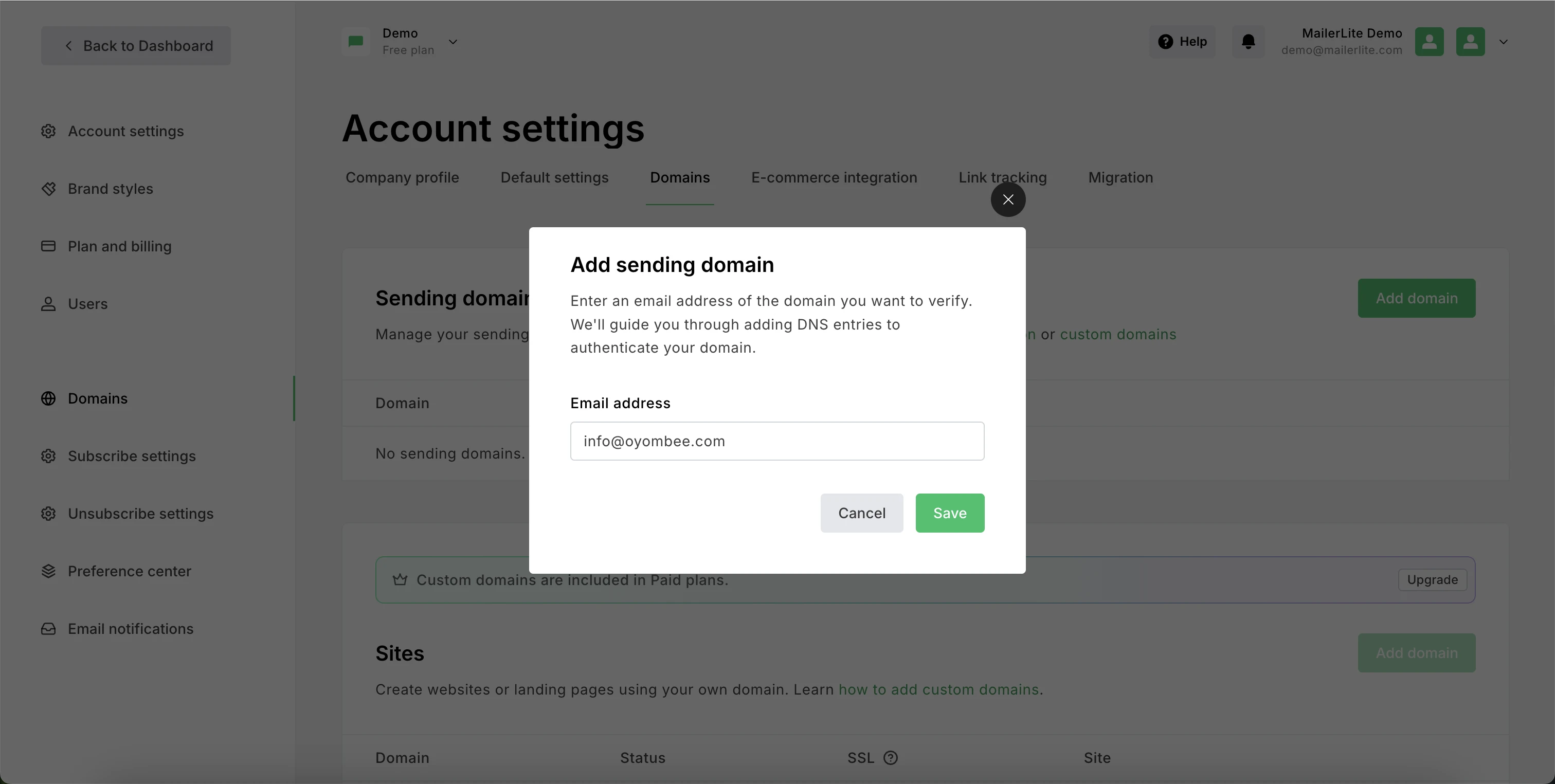
Once the domain has been added, click on the Authenticate button.
How to use GoDaddy automatic domain authentication setup
A popup will appear, prompting you to start the authentication process. Click Continue.
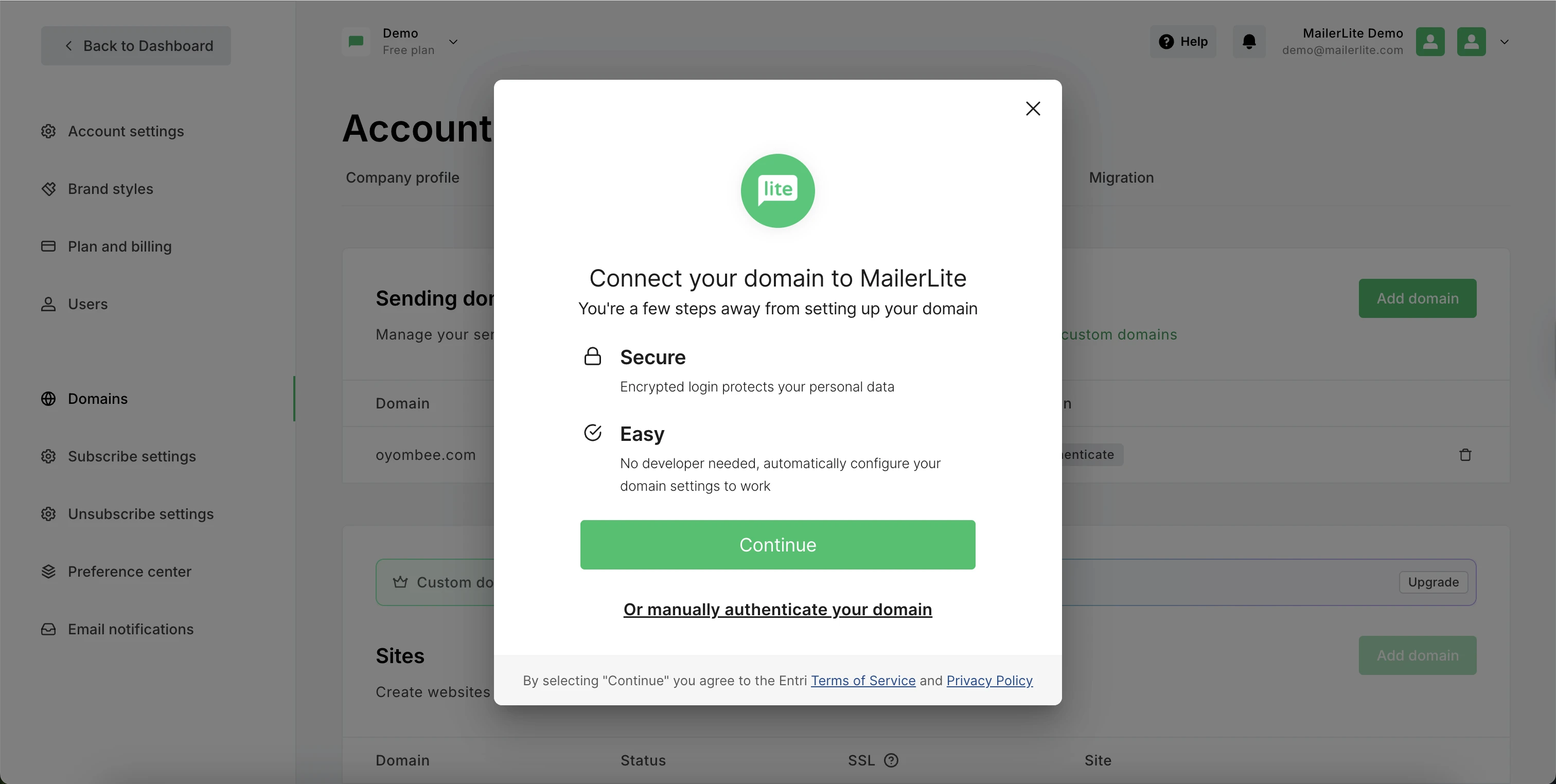
This tool will scan your domain and detect which provider is the host.
Once the provider has been detected, follow the instructions to connect to your account. You will need to authorise the connection and use your login credentials to log into your hosting provider.
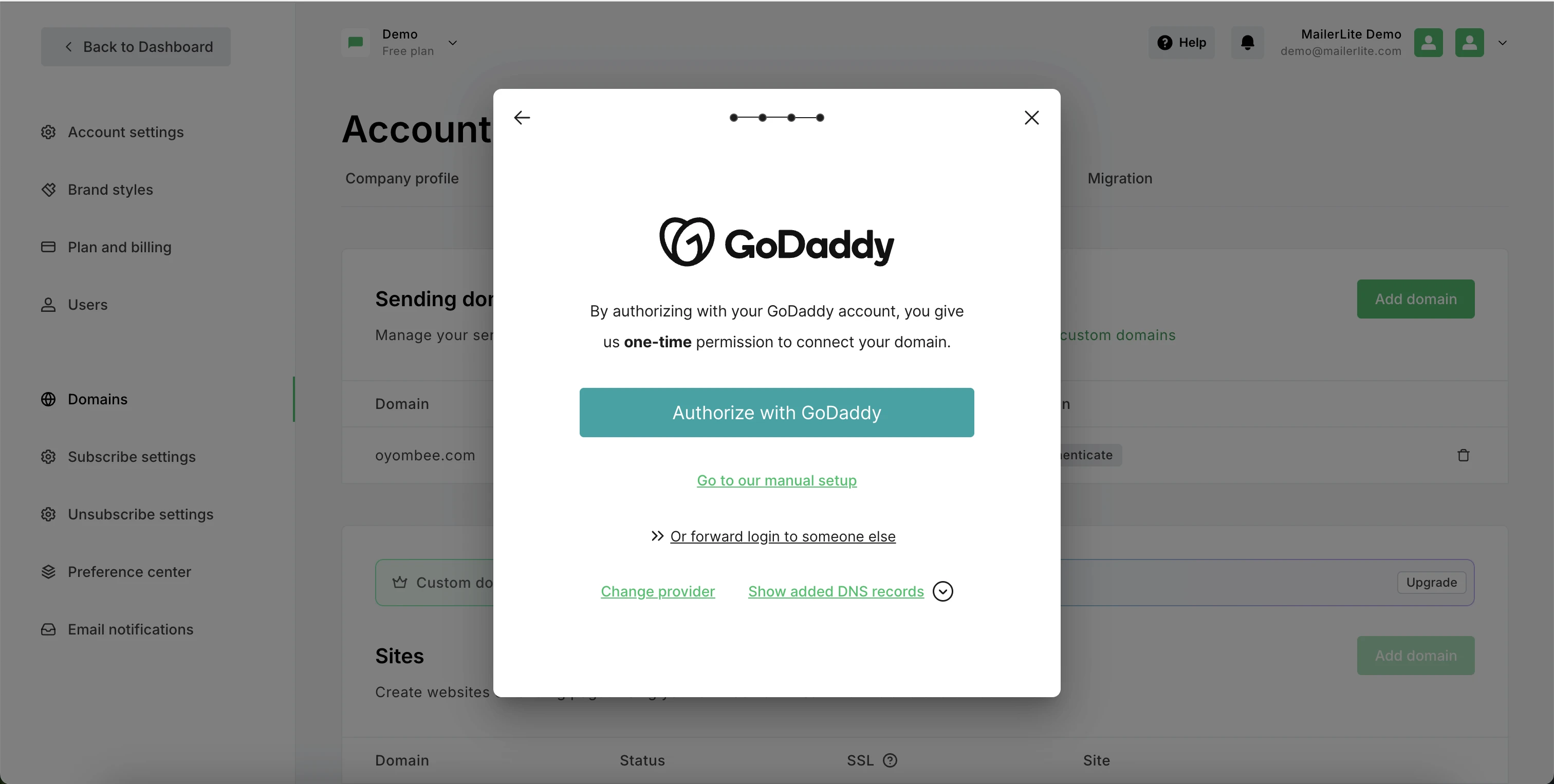
What if I do not have the login details?
By choosing the option to Forward login to someone else, you can share a link with someone who has the details to log in, so they can complete this part of the process.
Next, follow the steps to authorize MailerLite to configure your DNS and add the necessary records.
Once the DNS configuration is done, you will be redirected back to MailerLite. Refresh the page to see the updated status of your domain.
It can take up to 24 hours for your new DNS records to propagate and for your domain to be authenticated. You will see the Wait to activate status first, which will change to Authenticated once the process is completed.
Manual authentication
If you would like to access the DNS records and authenticate manually, switch to the Manual tab.
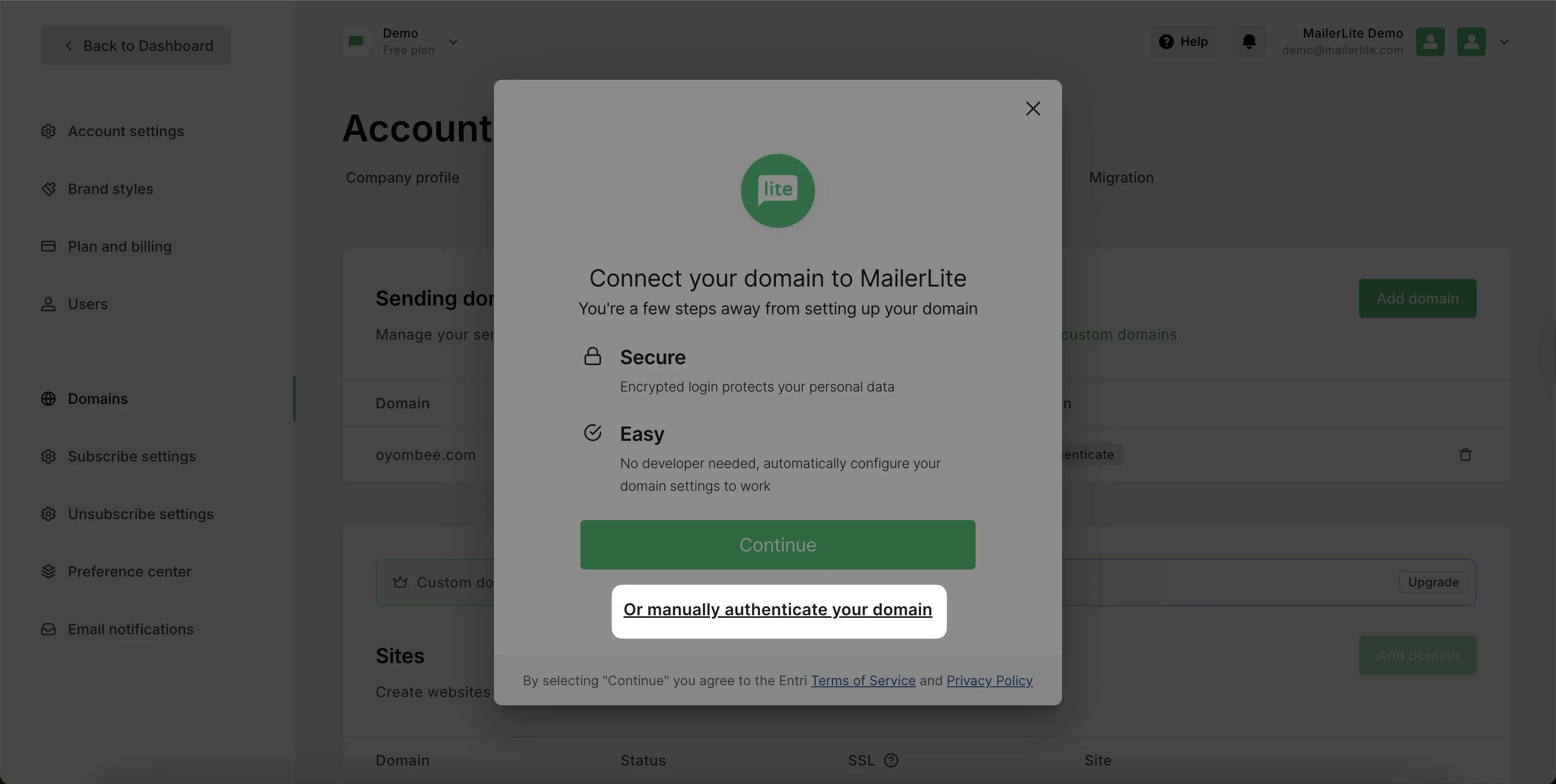
Head over to GoDaddy and log in to your account. To access the DNS zone page:
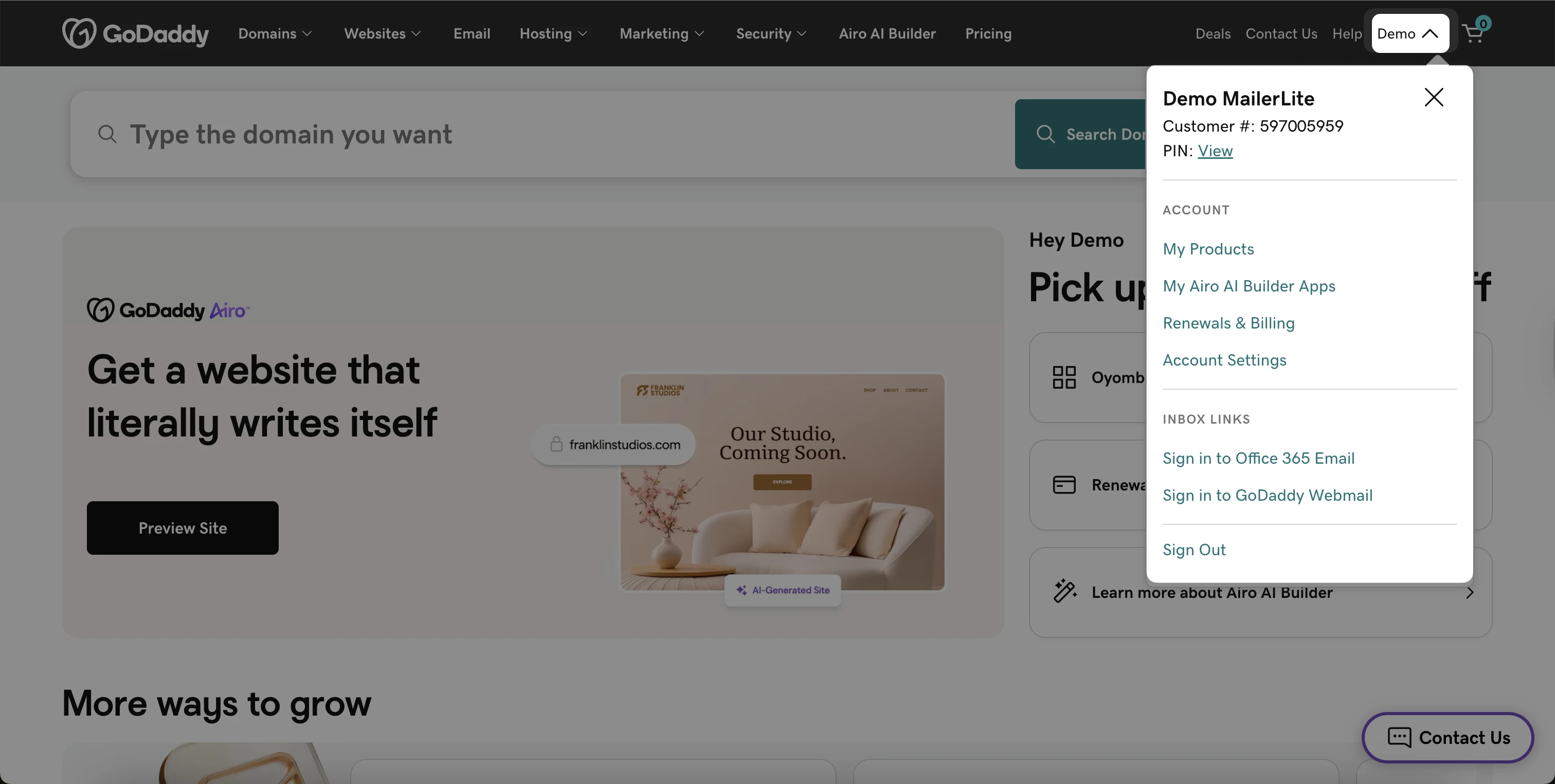
Click the down arrow next to your account name and choose My products from the dropdown.
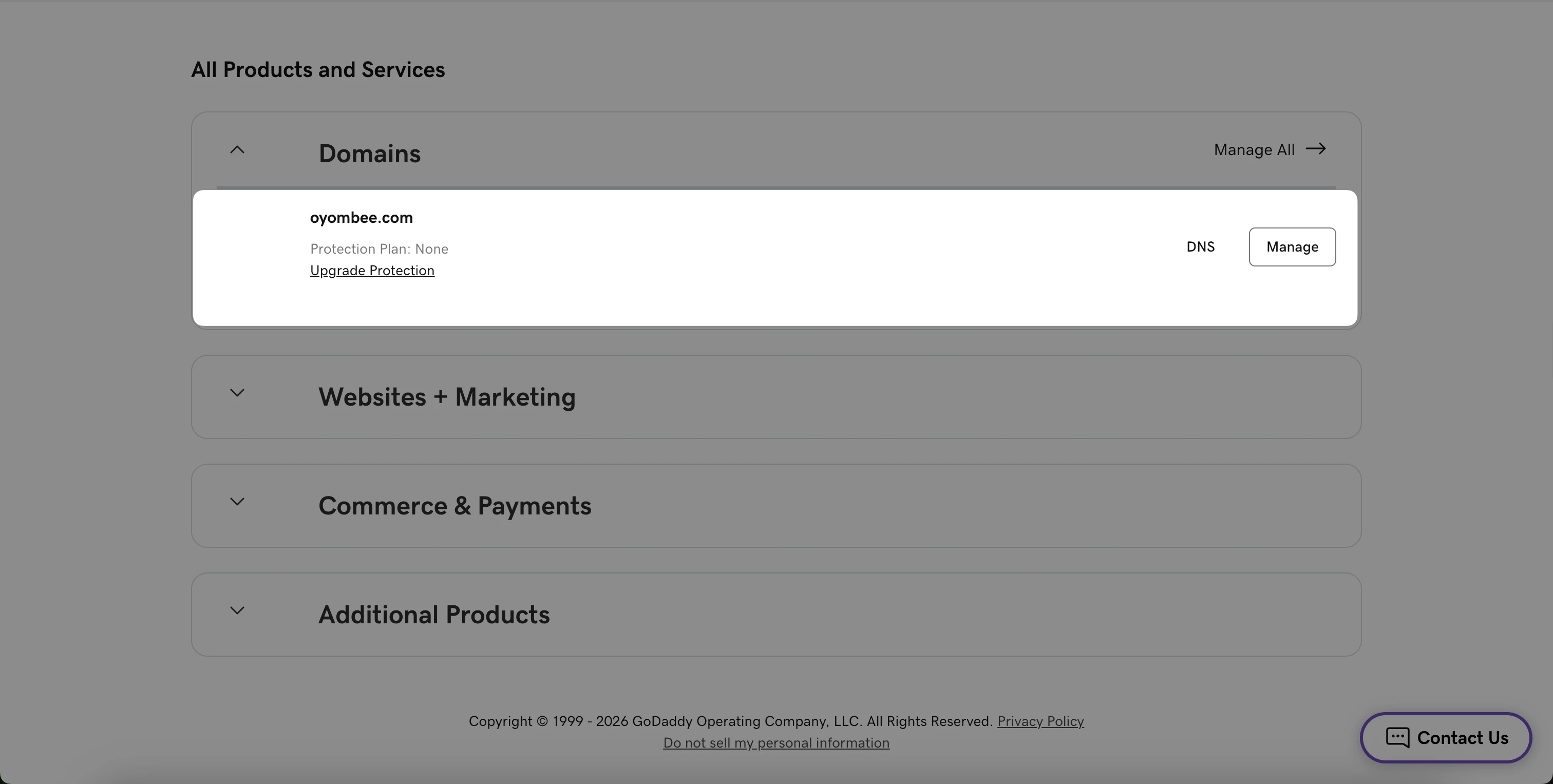
Scroll down to find your domain and click DNS.
How to add the DKIM record
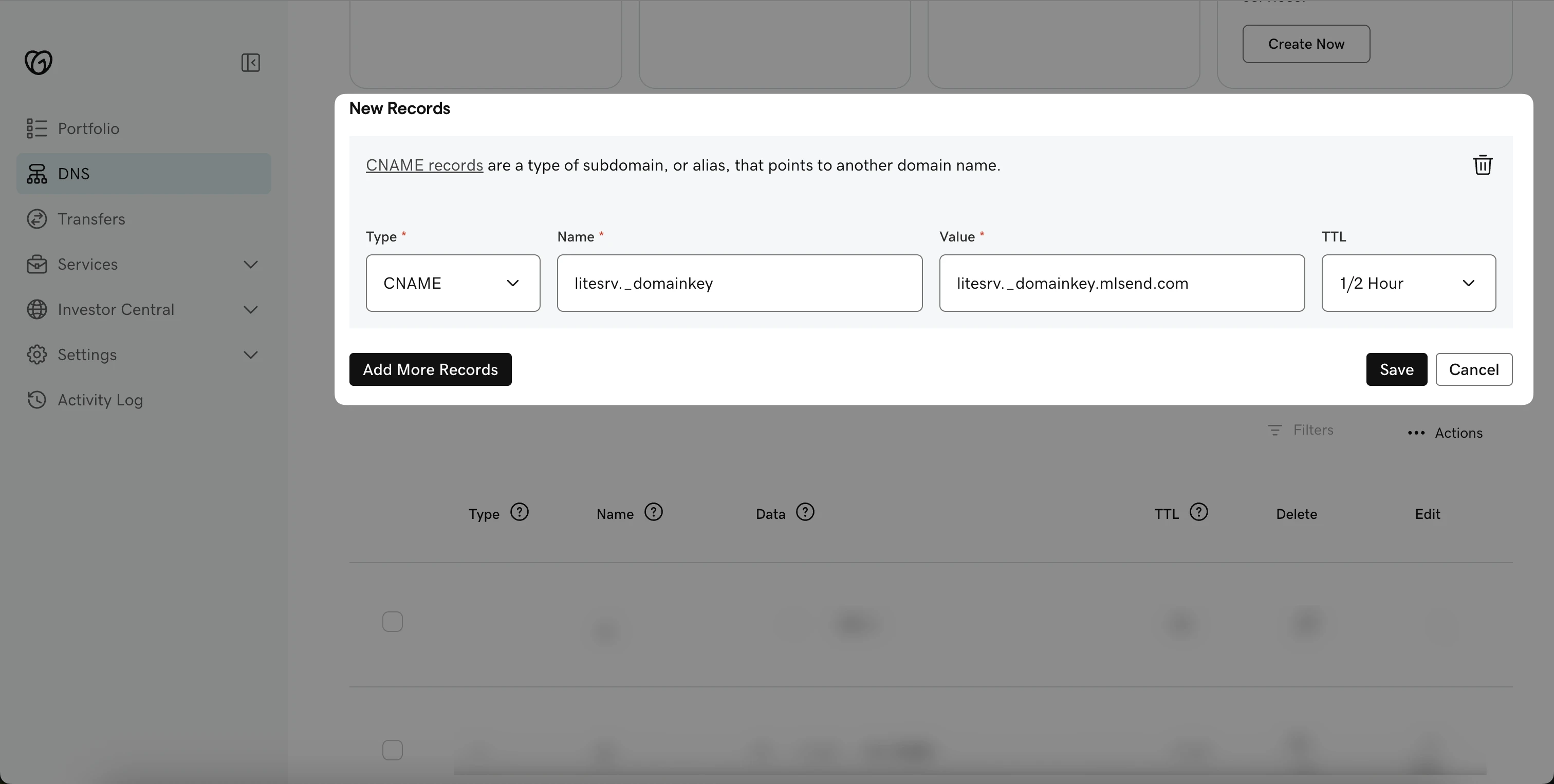
Click Add new record.
For Type, choose CNAME.
In the Name field, add
litesrv._domainkey.In the Value box, paste the DKIM value
litesrv._domainkey.mlsend.com.Leave the TTL at ½ hour.
Click Save.
How to add the SPF record
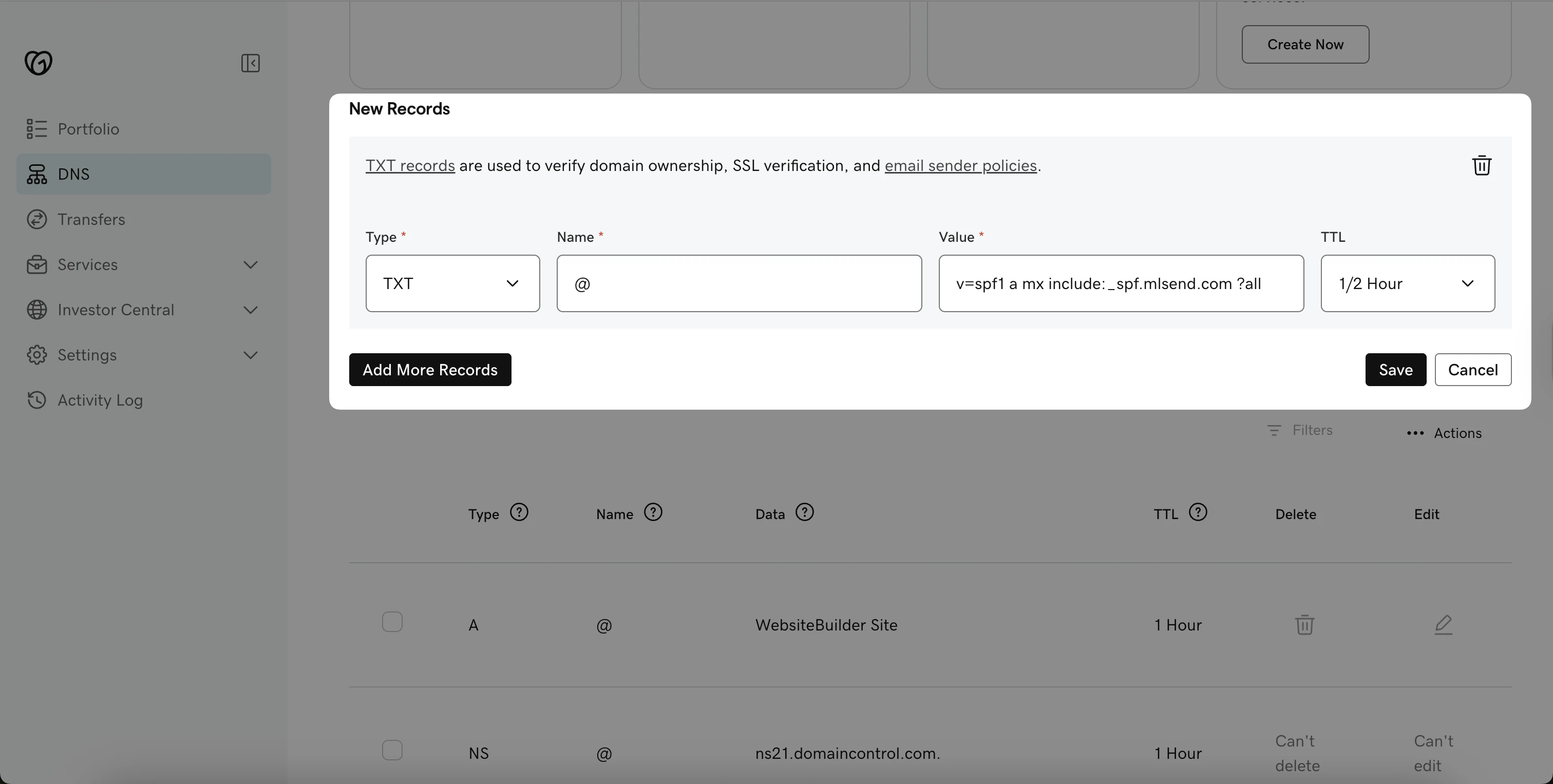
Click Add new record.
For Type, choose TXT.
In the Name box, enter
@.In the Value box, paste the SPF value from your MailerLite account.
Leave the TTL at ½ hour.
Click Save.
Important: It’s only possible to have one SPF record in your DNS zone. If you have more than one SPF record, then these need to be merged together. See how: How to merge SPF records
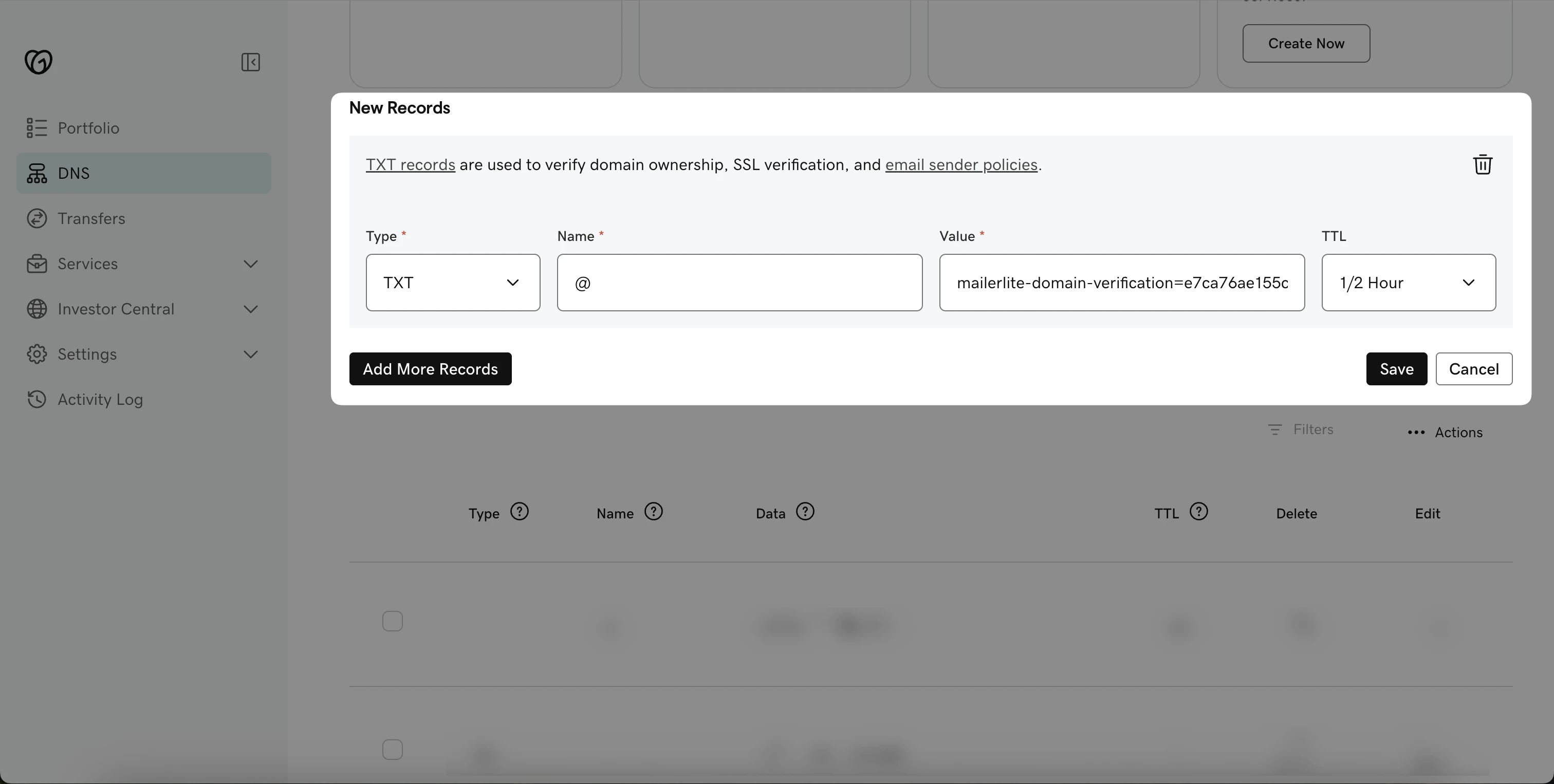
How to add the Domain verification record
Click Add new record.
For Type, choose TXT.
In the Name box, enter
@.In the Value box, paste the verification value from your MailerLite account.
Leave the TTL at ½ hour.
Click Save.
How to get the DNS records approved
Head back to your MailerLite Domains page and click on the green Check DNS records button on the domain authentication window. Once the records are approved, your new domain will be displayed as Authenticated ✅.
In some cases, it may appear that the records were not approved even if all of the information was correctly submitted.
There are 2 reasons why this happens:
It can take the servers up to 24 hours to completely update this information. Most of the time, however, it is approved and updated in a matter of minutes.
Some information has to be re-checked and updated.
🛠️ Need help? For solutions to common issues, check our guide Troubleshooting: Domain authentication.
However, sometimes the site will say that one or both records were not approved, even if all of the information was correctly submitted.
If you have any questions, contact our friendly support team, and we will gladly assist you.
Please note: While we’re happy to help with any issues taking place on our end, our expertise may be limited when it comes to third-party apps since we cannot access your accounts with those tools, even if they are connected to your MailerLite account. This limits the support we can offer, so we encourage reaching out directly to the support team of those third-party tools for better assistance.
In this case, GoDaddy's support page can be found here.