What's the best lead magnet for your business? We analyzed 41,000+ forms to find out

 Tautvydas, design lead, and Marta, SRE project manager
You know that offering a lead magnet in exchange for an email address can rapidly grow your list. But what’s the best lead magnet to use for your business? And do some offers convert better than others?
To get the answer, we analyzed over 41,000 forms and pop-ups to discover which types of lead magnets have the highest conversion rates.
It turns out that some types of offers performed much better than others.
What's the best lead magnet for your business? Key takeaways
The best lead magnet for most businesses are learning resources like webinars, micro-courses and tutorials, which have an average conversion rate of 27.4%
Giveaways and contests were the highest-performing lead magnets overall, with an average conversion rate of 29.37%, but these offers have some big downsides
Interactive tools and reports also performed well, with average conversion rates of 26.44% and 24.61%, respectively
The most used offer was to receive a newsletter or updates, but this was the second-worst-performing offer by conversion rate
Discounts were the worst-performing lead magnet, although they have other benefits
The average conversion rate across all forms and pop-ups was 22.16%
About the data
We analyzed the conversion rates of over 41,000 signup forms and pop-ups created by more than 10,000 paid MailerLite users who had at least 100 conversions from their forms.
We then broke the forms down into categories based on the keywords used. This resulted in 11 clear types of lead magnet:
Discounts: Money off a purchase.
Waitlists: Priority alerts and early access to new releases.
Giveaways and contests: The chance to win a prize.
Reports or ebooks: Valuable, in-depth content.
Checklists: Checklists and cheatsheets to get jobs done.
Templates: Prebuilt templates and resources.
Consultation and service offers: Calls, demos, audits, and more.
Learning: Educational resources like webinars, courses, and workshops.
Interactive tools: Quizzes, calculators and other tools people can engage with.
Newsletters and updates: Company newsletter and updates.
Other: Everything else and those that couldn't be classified.
Form conversion rate is the percentage of people who submitted a form after the form is opened, which occurs when either a page with an embedded form is opened or when a pop-up appears.
Newsletters and updates were the most used offer
The most popular lead magnet was brands offering access to a newsletter or updates via email.
It’s easy to see why these offers are popular: You don’t need to spend time creating an offer; just create a quick form and embed it on your website.
This speed to going live makes newsletters and update offers incredibly useful, especially if you’re just starting out or if you want a generic offer that appeals to many people. Plus, you can use this offer alongside your other lead magnets.
But at 17.46%, the conversion rate for these forms was the second-lowest of any category on our list.
This is likely because:
These offers aren’t targeted. Brands put these offers on pages across their websites in order to attract browsing subscribers. This is seen in the fact that these offers get over 10 times as many views as the next most popular offer.
It’s not a particularly enticing offer. Unless your newsletter has extremely high-value content, offering a lead magnet can provide more immediate value than simply asking someone to join your list.
There is a big opportunity for brands that use newsletters or update offers to boost conversions by using a lead magnet.
Giveaways and contests were the highest converting offer
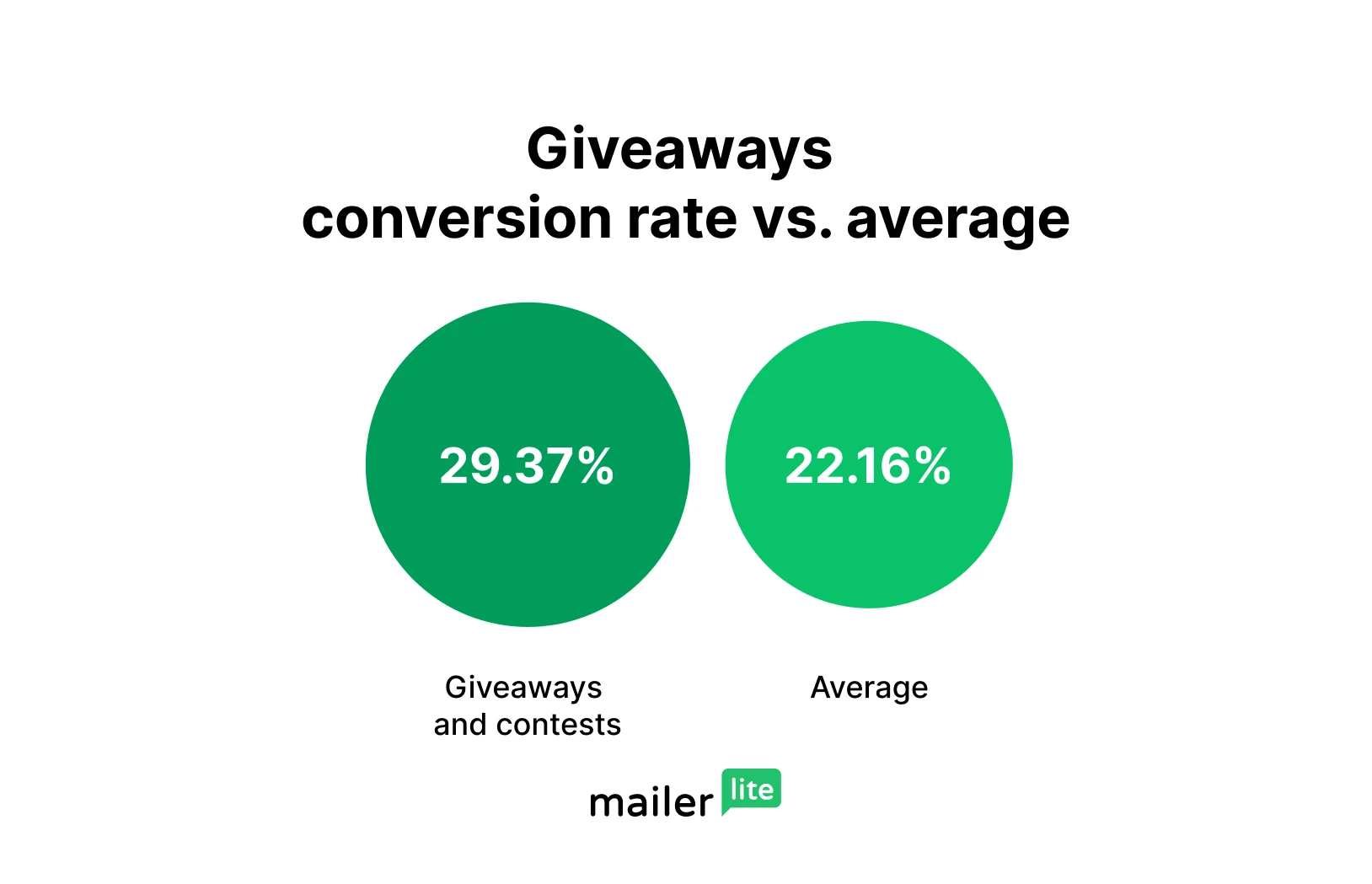
With an average conversion rate of 29.37%, giveaways and contests—where people enter their email address for the chance of winning a prize—were the most effective ways to generate email subscribers.
These offers have a high conversion rate because:
People can win a prize with very little effort. They just need to enter their email address into the form
Traffic sent to these pages is often quite targeted. If a brand promotes the giveaway on social media, anyone visiting the page is already primed to enter their address
Giveaways and contests can be extremely effective. Jonathan Barbera, founder of e-commerce brand Live The Creed, told us that he’s able to generate large numbers of new subscribers in a short period by teaming up with other brands to run a giveaway offer.
But, he also highlighted one of the major downsides: subscribers who come via giveaways aren’t that engaged. Many of them ignore your emails once the contest is over.
You can do 2 things to overcome this issue:
Create an automated sequence built specifically to nurture people who join your list via the giveaway.
Track the engagement of signups and quickly remove those who don’t interact.
While giveaways can generate many subscribers, we don’t think they’re a suitable lead magnet for most businesses. But if you want to try one out, the article below has all the details.

Learning offers are the best lead magnet for most businesses
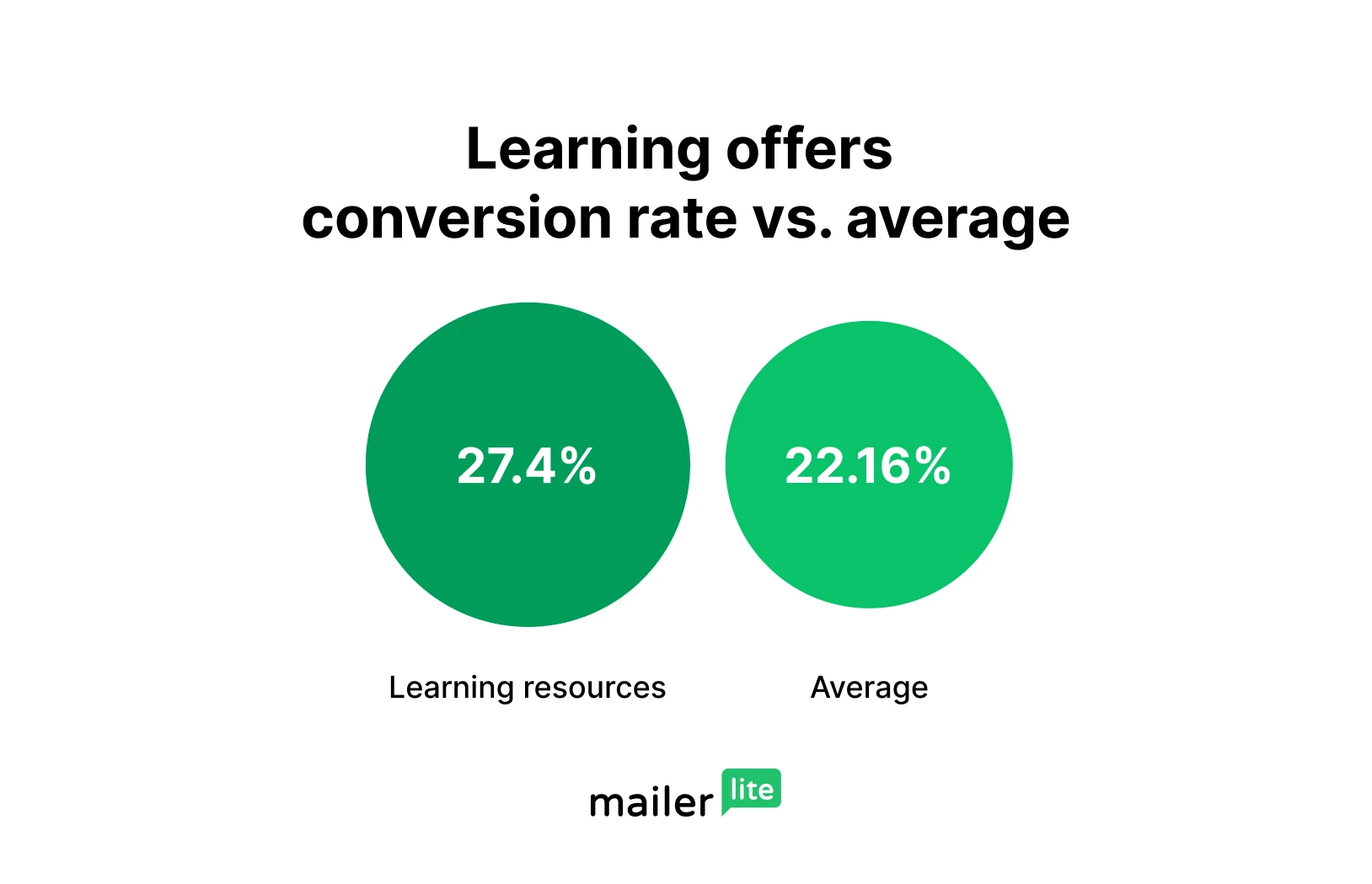
The best lead magnet for most businesses is learning resources, which have an overall conversion rate of 27.4%. This category includes offers like online courses, workshops, challenges, and training.
It’s easy to see why these lead magnets do well: they offer high value to the people who sign up, and they solve an immediate problem.
They’re also easy to connect to the main problem your business solves, making them an effective way to generate qualified leads. For example, an email marketing agency could offer an email marketing masterclass and then try to nurture signups into customers.
Interactive tools, reports and checklists also worked well
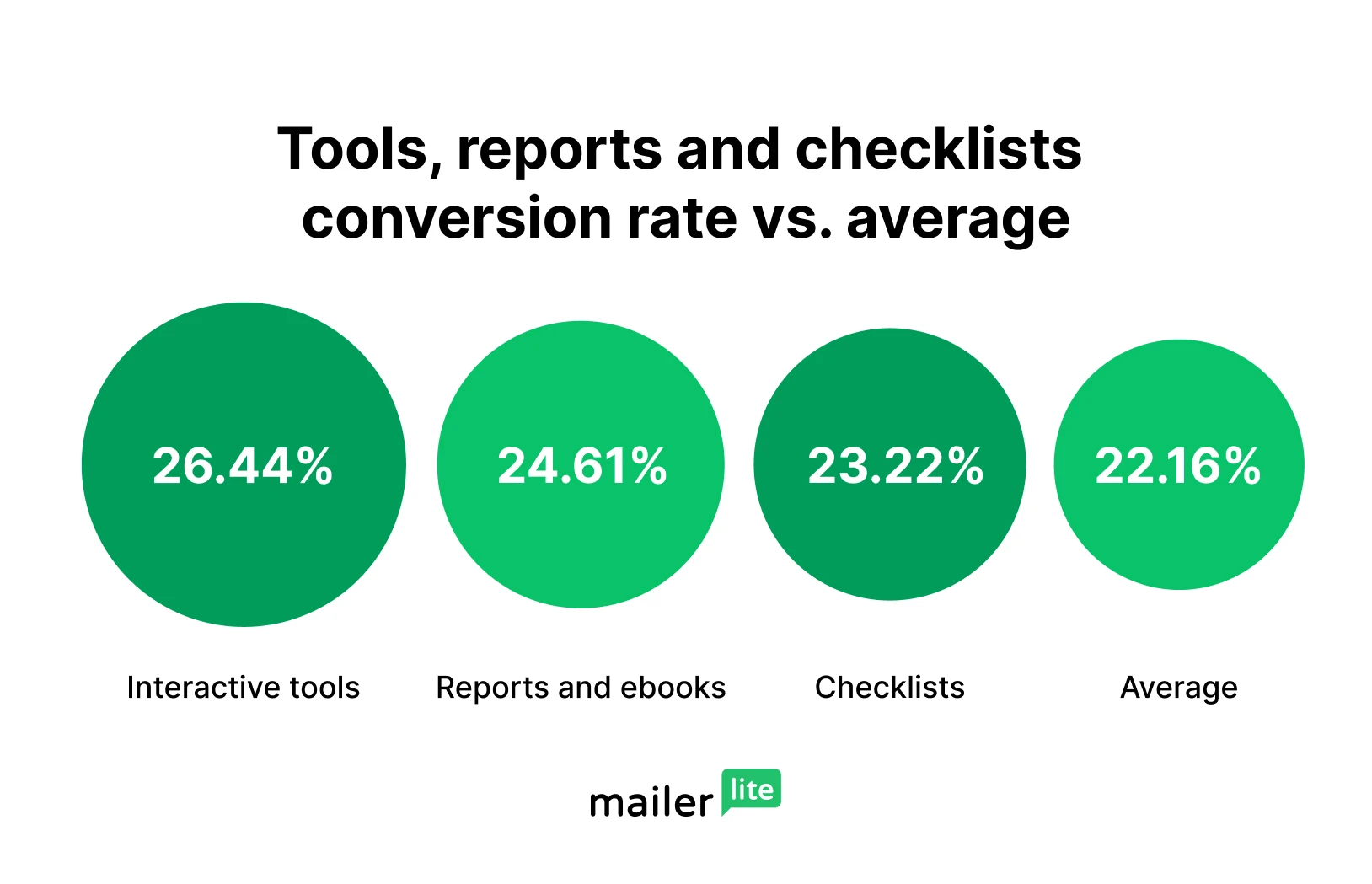
The lead magnet categories for interactive tools, reports and ebooks, and checklists also performed well, with an average conversion rate of 26.44%, 24.61% and 23.22%, respectively. This is above the average of 22.16%.
Many marketers will be happy that ebooks and reports work, since they are also the second most popular category of lead magnet, after newsletters and updates.
Interactive tools include lead magnets like calculators, quizzes, and AI generators. This is a category we've been experimenting with, and we have recently released an email scratch card generator, that anyone can use to add fun scratch cards to their emails.
We were surprised that templates had a slightly below-average conversion rate of 21.14%. Especially since our email marketing content calendar is one of our best-performing offers.
The best lead magnets, whether reports, tools, learning resources or checklists, typically have the following characteristics:
Specific: They solve a clear problem for the lead.
Instant: They are delivered immediately and contain information that signups can use right away.
High value: The higher the value of the problem the lead magnet solves, the more effective it will be.
Tied to a product: The more closely related the lead magnet is to a product or service, the more likely it will be to generate qualified leads.
Find out more ideas for creating an effective offer in our lead magnet guide here.
Discounts had the lowest conversion rate of any kind of offer
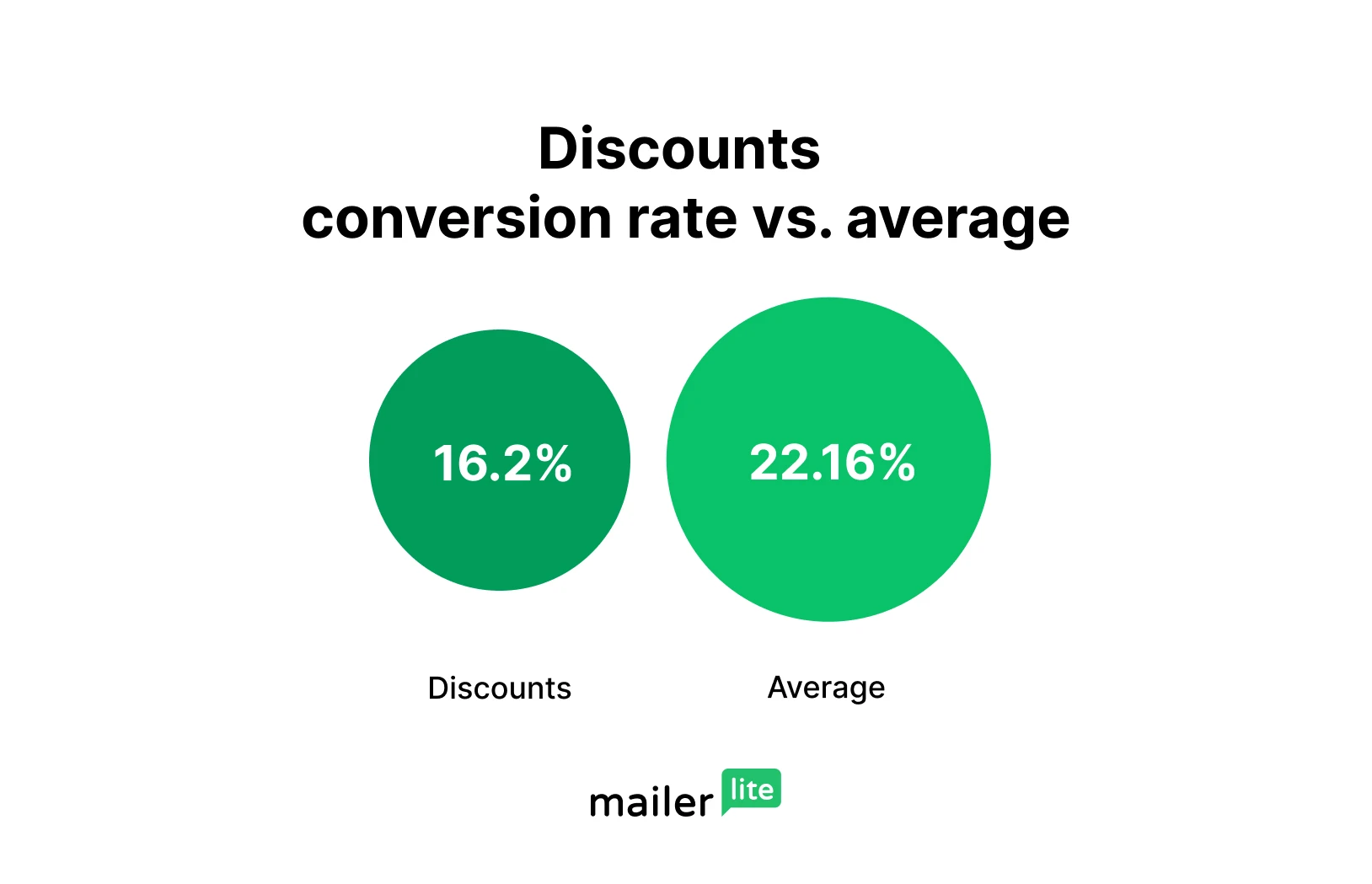
Forms and pop-ups offering a discount had the lowest conversion rate of any offer, at just 16.2%.
Discounts likely underperform because they’re used as a blanket offer that gets shown to every website visitor. Offers that aren’t targeted will always have a lower conversion rate than targeted ones.
While the conversion rate is low, using a discount as a lead magnet can have big benefits.
First, they’re super easy to create: You just need to create a coupon in your e-commerce store and offer it to customers. And second, they can encourage people to use the discount and buy your product.
Specialist offers have value in certain situations
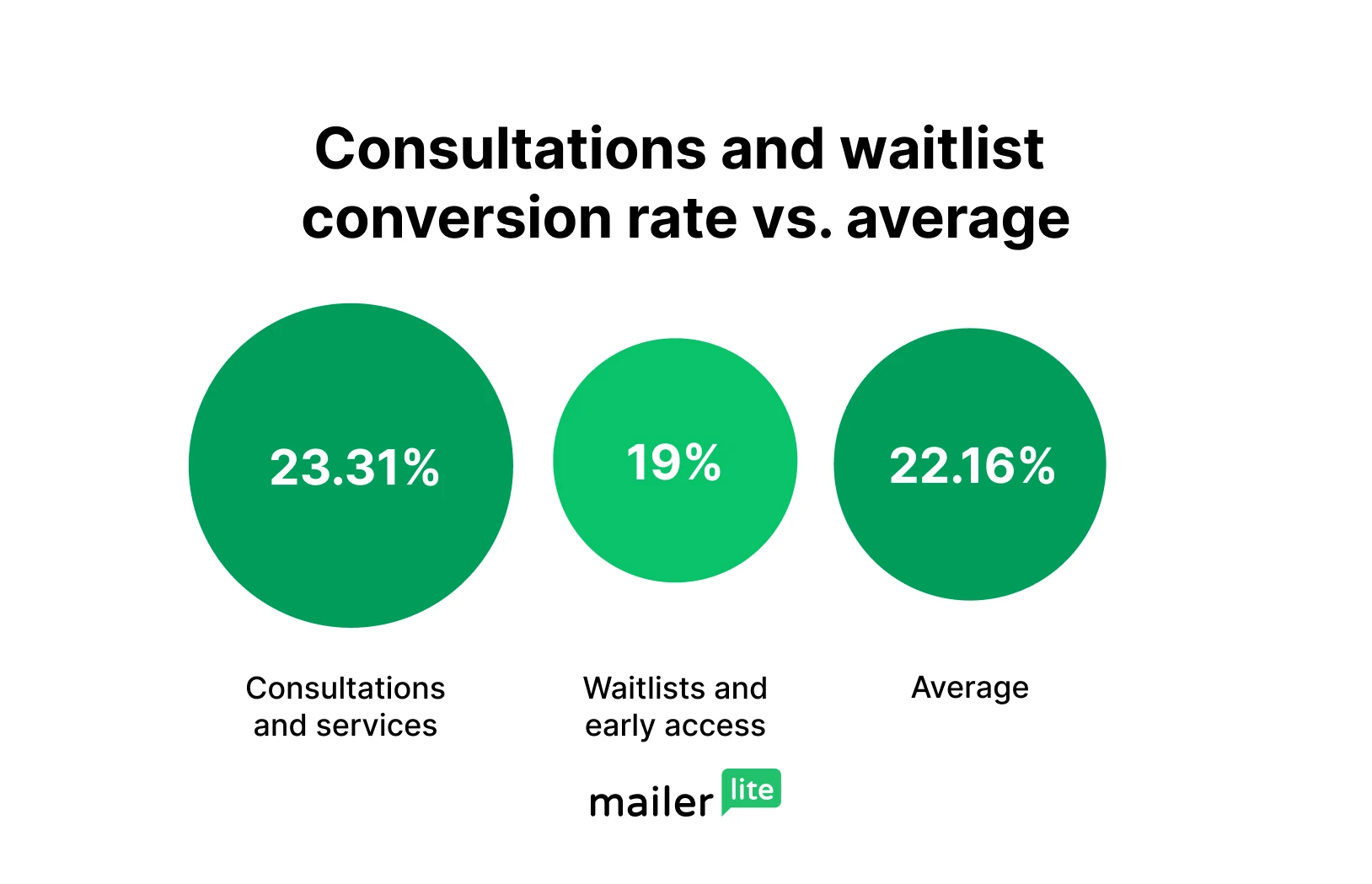
Consultation and service lead magnets, which included offers such as calls, audits, strategy sessions, and demos, were the 5th-best-performing offer, with an above average conversion rate of 23.31%.
Considering the extra effort signups have to go through to accept the offer—often joining a live call—we think these offers are a great way for service businesses to generate extremely warm leads.
The other offer category we like is waitlists and early access. While these were the third-worst-performing offers overall, with an average conversion rate of 19%, waitlists and early access offer significant benefits that make them worth exploring if you’re planning to release a new product.
They are easy to offer, since you don’t need to create a resource.
They give you a list of people who you know want to buy your upcoming product.
These points mean it’s easy to recommend creating a waitlist to promote an upcoming product.
Bonus 1: More opens mean lower conversion rates
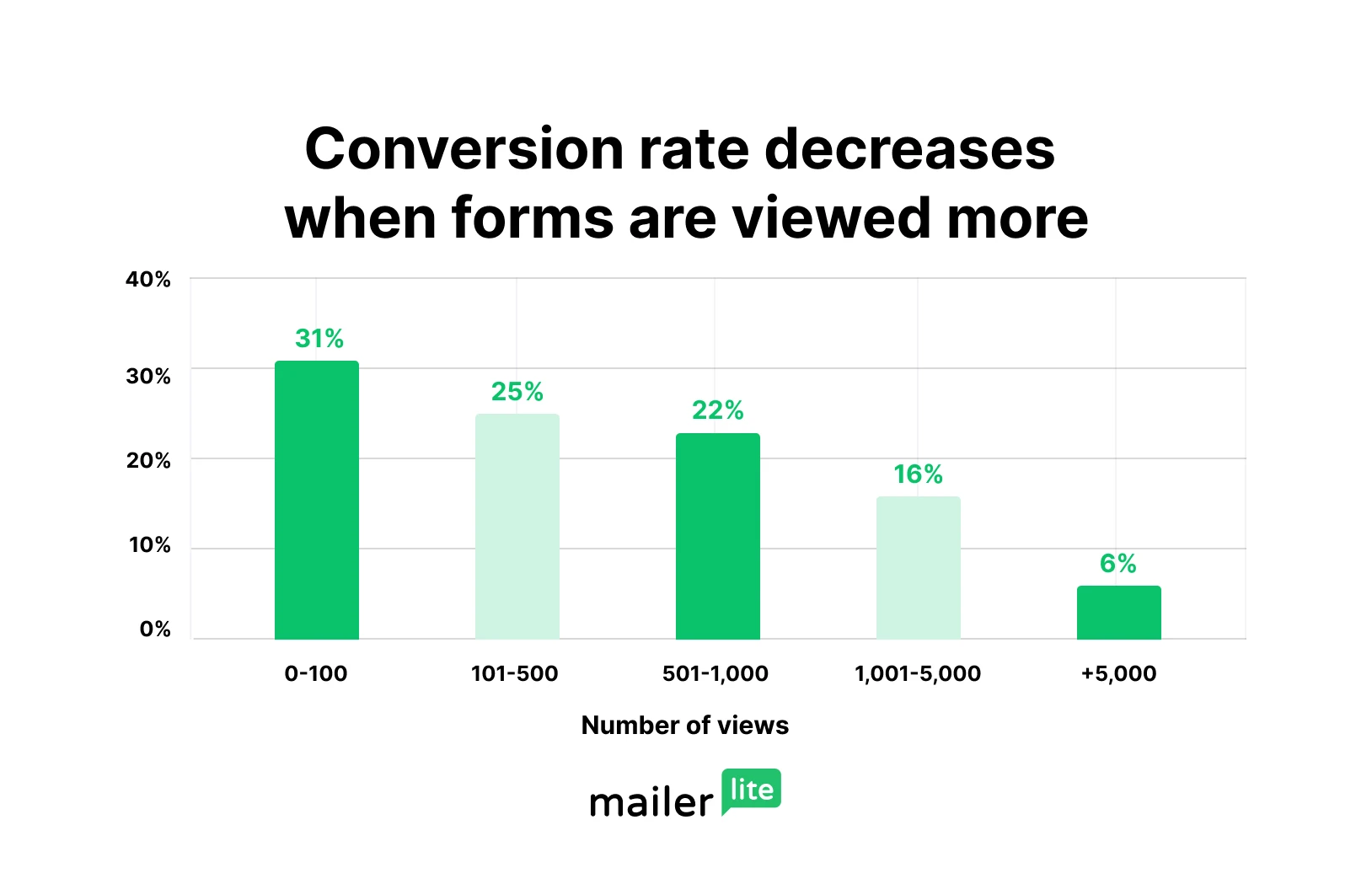
A form’s conversion rate decreases as more people see it. And the difference is significant: Forms with under 100 views have a conversion rate over 5 times higher than those with over 5,000 opens.
This likely comes down to targeting. Forms with fewer opens are likely to be on pages where people send targeted traffic directly to the offer.
On the other hand, those with a lot of views are more likely to be general offers shown to all of a website's visitors.
Bonus 2: Forms massively outperform pop-ups
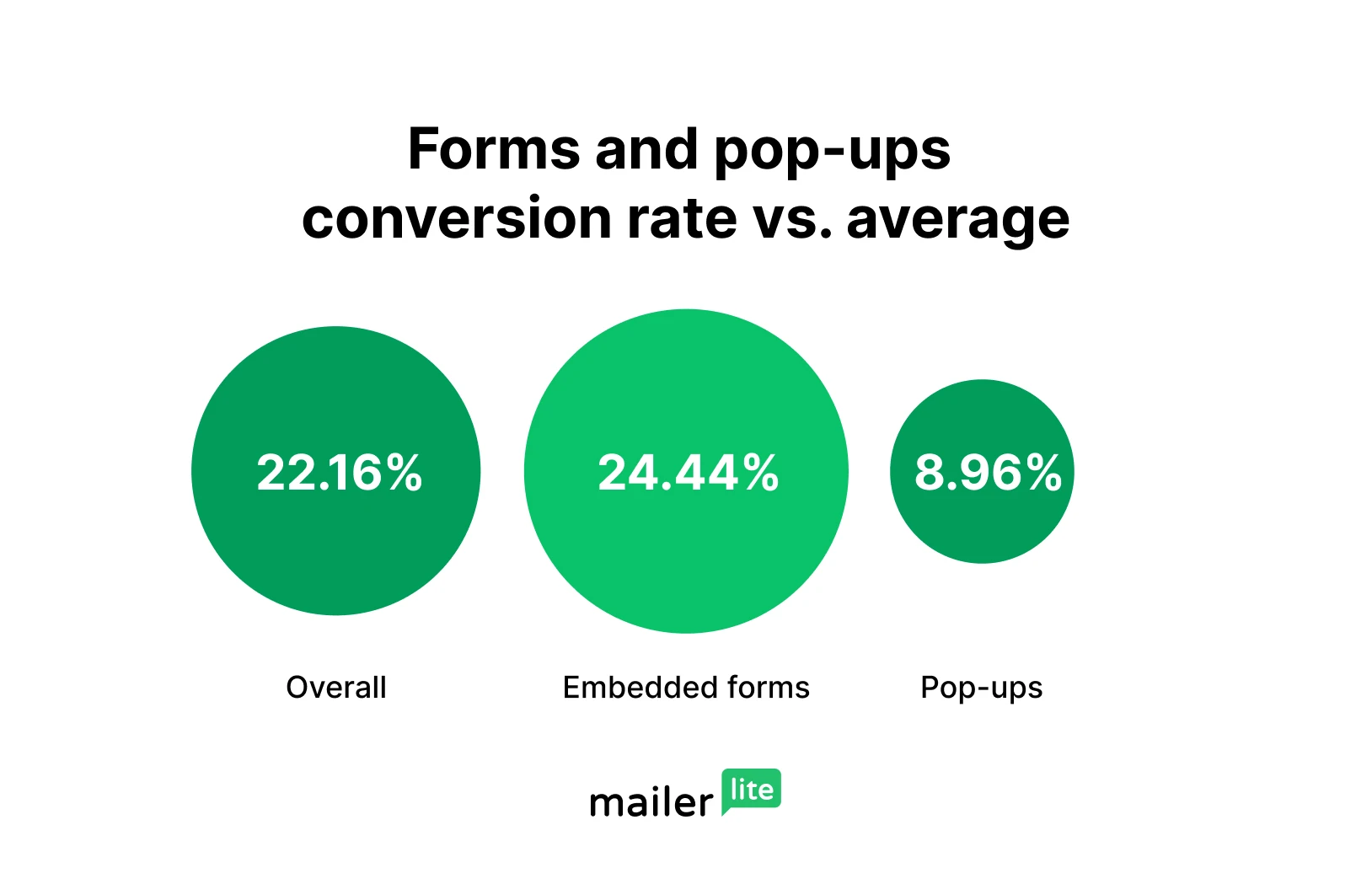
With an average conversion rate 24.44%, forms had almost 3 times the conversion rate of pop-ups, which had an average conversion rate of 8.96%.
This is likely because an email signup form is often the main part of a landing page: think of lead magnet promotion pages or newsletter signup pages where the form is the first thing people see.
On the other hand, pop-ups often interrupt the user while they are interacting with other content. It’s almost a natural reaction to close the pop-up and continue with what you were doing.
Teasers are unobtrusive buttons that show on a webpage once someone closes the pop-up. This gives website visitors another chance to view the offer after they have closed it. Find out more about creating a pop-up with a teaser here.
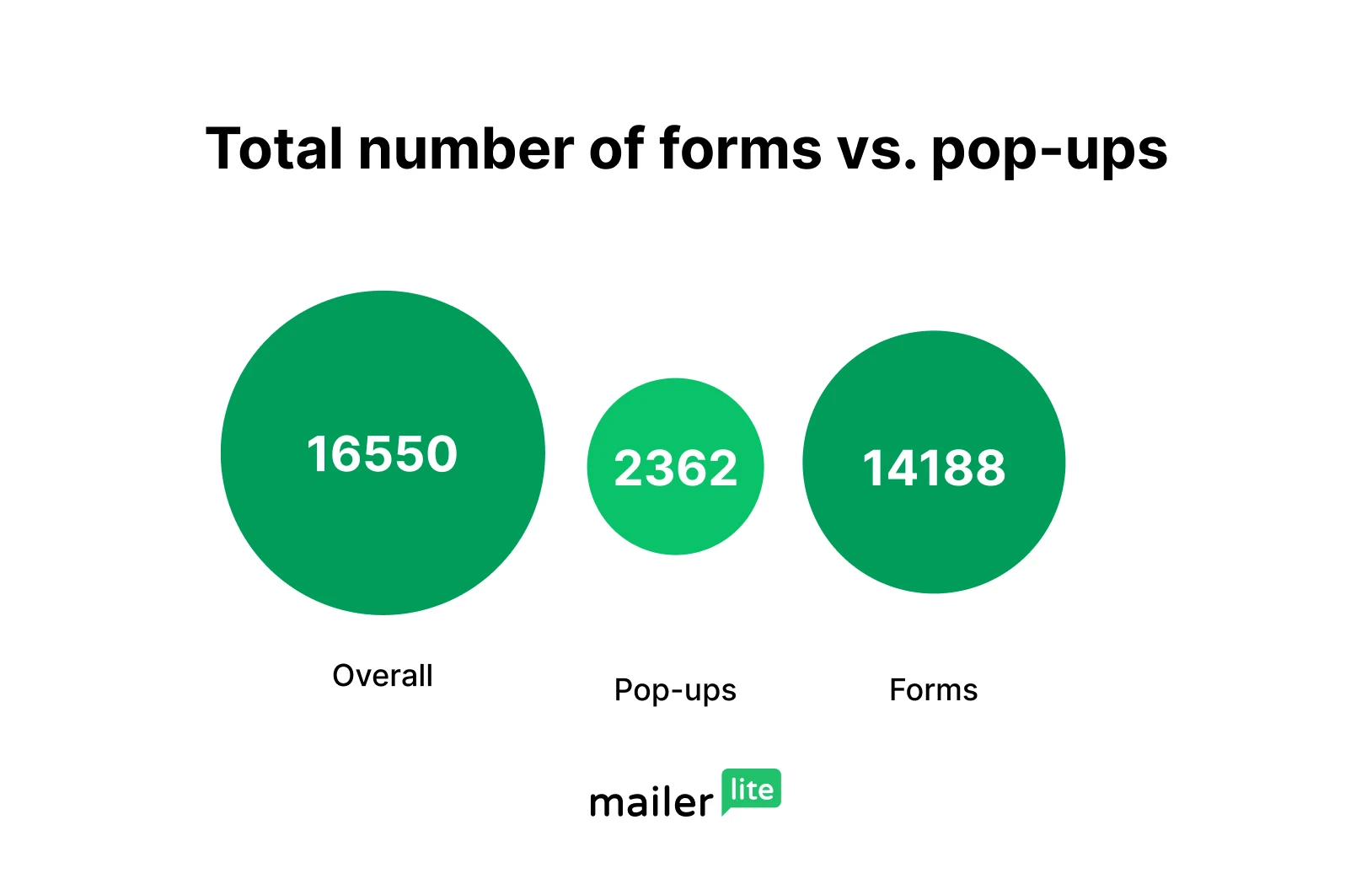
Only a third of the accounts that used forms also used pop-ups. This points to an opportunity for these businesses to increase signups by adding pop-ups to their websites and landing pages.
Even if pop-ups don’t perform quite as well, they can still generate a lot of conversions. See 18 examples of the types of pop-ups you can use here.
So what’s the best lead magnet for your business?
Here are our 4 key takeaways for how you can apply the data in this article to your marketing.
1. Newsletters and updates offers are useful, but you’re missing out if this is all you use
Offers for newsletters and business updates were our most used offer. These are easy to set up and they result in conversions. It’s easy to recommend that businesses add forms promoting their newsletter to their website.
But if that’s all you use, you’re missing out. Forms with these offers had the second-lowest conversion rate of all the offer-types we looked at. Consider spending some time creating specific lead magnets to boost conversions.
Our guide to lead magnets has 41 different examples you can use in 9 industries, including fitness, real estate, marketing and more.
2. Learning resources are the most effective lead magnet for most businesses
The most effective kind of lead magnet for most businesses is learning resources. These offer high value and can be consumed immediately by the subscriber. It’s also easy to connect these to your main product, making them an effective way to generate warm leads.
If you don’t want to create a learning resource, ebooks, reports, interactive tools, and checklists all perform well too.
3. Giveaways can quickly generate subscribers
Contests and giveaways can generate a high number of subscribers. But they have significant downsides, such as low engagement after the giveaway has finished.
Nonetheless, these offers can be a useful way for some businesses, such as e-commerce stores, to rapidly boost their list size.
4. Consider specialist lead magnets in certain situations
Consultation and service offers perform well, and it’s easy to see how these could be exceptionally effective for certain types of business, such as freelancers, coaches, and agencies.
Meanwhile, preorder forms and discounts might not convert that well, but they are still useful to use in some situations.
Final thought: Test what works for you
This guide looks at the overall data to see what works for the majority of businesses. It’s a good starting point to use when creating a lead magnet. But your business, product and audience will influence what kind of lead magnet works best for you.
With that in mind, consider using tools like A/B testing and form reporting to test multiple offers and see what works best for you. By using data-backed lead magnets and continuously testing, you start to generate more leads than ever before.