What’s the average email marketing conversion rate? (300 million+ emails analyzed)

 Izabella and Remis, people and culture team.
Every marketer knows email drives sales. But how many sales should you actually expect when you send an email?
To find out, we analyzed over 300 million emails to discover the average email marketing conversion rate for campaigns and automations.
We also looked at how different factors can impact orders, such as the number of campaign recipients or the number of links in an email. Read on to see the results and learn how to get more sales every time you hit send.
Email marketing conversion rate: Key takeaways
The average email marketing conversion rate for campaigns is 0.32%
The average conversion rate for automated emails is 0.42%
The conversion rate for automated emails is 31% higher than for campaigns
Despite the lower conversion rate, campaigns result in far more total sales than automations, since the volume of sent emails is much higher
Conversion rates go up when you send targeted emails
Emails sent to more people get more total orders
Conversion rate is highest when you include 2 to 5 links in the email
About the conversion rate data we used
For this report, we analyzed over 300,000 campaigns and 10,000 automations to discover the average email marketing conversion rate. This included over 300 million sent emails!
All the emails were sent from accounts with a connected e-commerce store and had e-commerce tracking turned on. We only included campaigns and automations with associated orders, ensuring we only focused on promotional emails.
How do we track email conversions?
We track conversions by looking at the number of orders in a connected store that can be attributed to an email. An order is attributed to an email when someone clicks on a link in the email and then makes a purchase in the connected store within 30 days.
The purchase is always attributed to the last email the person clicks on. So if a subscriber clicks on an email on Monday, and then another on Thursday, before actually buying on Friday, the order will only be attributed to the email sent on Thursday.
What is conversion rate in email marketing?
Conversion rate in email marketing is the percentage of people you send an email to who ultimately buy your product.
You calculate it by dividing the number of sales by the number of recipients and multiplying the answer by 100. If you send an email to 100 subscribers and 5 people buy, you have a 5% conversion rate.
What is the average email marketing conversion rate?
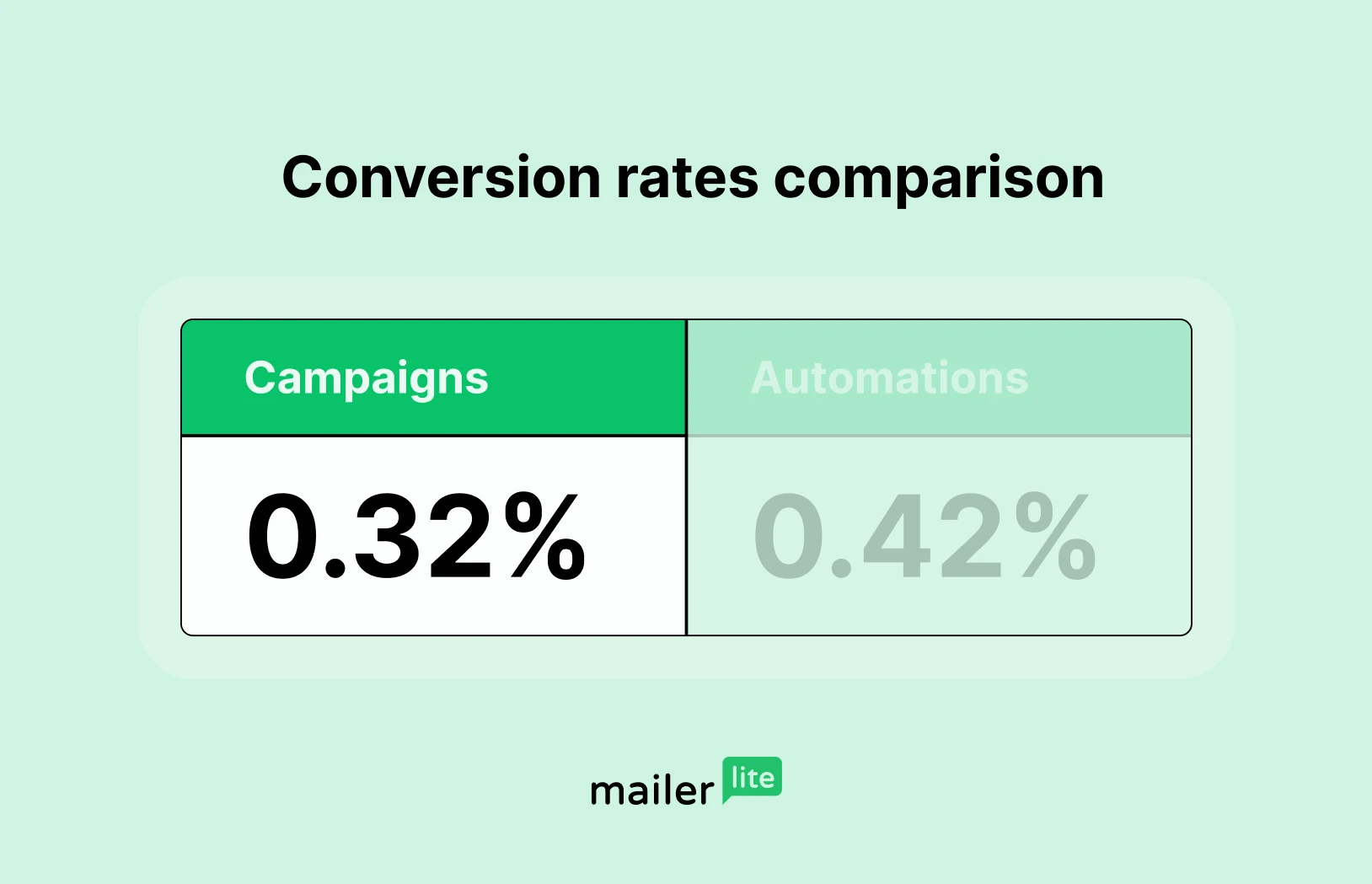
The average email marketing conversion rate in our dataset of 300,000+ campaigns was 0.32%. This means that you can expect to receive around 3 purchases per 1,000 email subscribers you send to.
This conversion rate shows the value of email marketing as a consistent source of easy sales. You own the channel, it costs nothing to reach these people beyond the price of your email marketing tool, and you can send multiple emails per week or month, each one likely to result in orders.
What is the average conversion rate for automated emails?
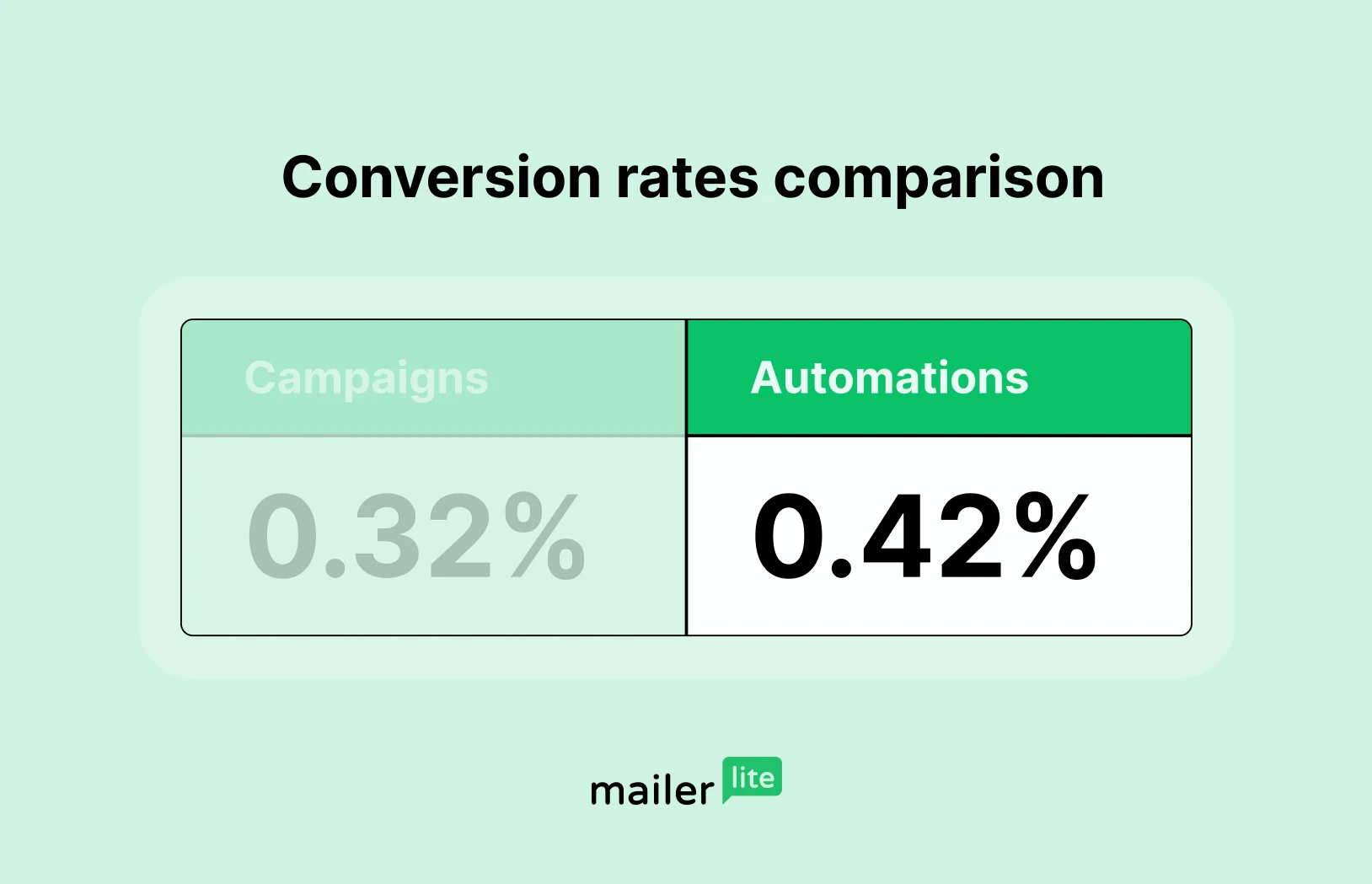
The average conversion rate for automated emails is 0.42%. This is 31% higher than the average conversion rate for campaigns. If you send 1,000 automated emails, you’d expect around 4 sales.
The higher conversion rate is likely because automated emails can be triggered at the exact time someone is ready to buy. Abandoned carts or interest-based messages are the final step to get a sale over the line.
While automated emails have a higher conversion rate, the vast majority of sales still come from campaigns, since these are sent at a much larger scale. In a previous study, we found that 92% of orders come from campaigns.
How to improve email marketing conversion rates
What do you do if your conversion rates are lower than these averages? Try out some of these steps to boost your email conversion rates.
1. Improve your email targeting
The easiest way to improve your conversion rate is to send targeted offers. When you send offers that align with people’s needs or interests, they’re more likely to buy.
Our data backs this up, showing that conversion rates increase when you send to fewer subscribers.
| Recipients | Conversion rate |
|---|---|
| 1-500 | 3.28% |
| 501-1,000 | 0.53% |
| 1,001-5,000 | 0.19% |
| 5,001-10,000 | 0.1% |
| 10,000+ | 0.05% |
And it’s not just conversions that go up when you send targeted emails. Previous studies show that clicks and opens go up by 267.21% and 36.69% when you send to targeted subscribers.
Of course, while conversion rates increase when you send to fewer people, the number of total orders will decrease, too. That’s where it can be helpful to send multiple emails to different groups, so your entire list receives relevant offers.
MailerLite has plenty of tools to help you create targeted campaigns faster. Here are some of the highlights:
Duplicate existing emails with a click and then simply edit the content
Create templated emails and content blocks that you can reuse for different campaigns
Use drag-and-drop product blocks to automatically add product info to your emails
Use AI to write content, subject lines and preheaders. Our automated subject line suggestions get 13% more opens!
With these tools, you can boost your conversion rates with targeted emails, without spending all your time creating multiple campaigns.
2. Track your metrics
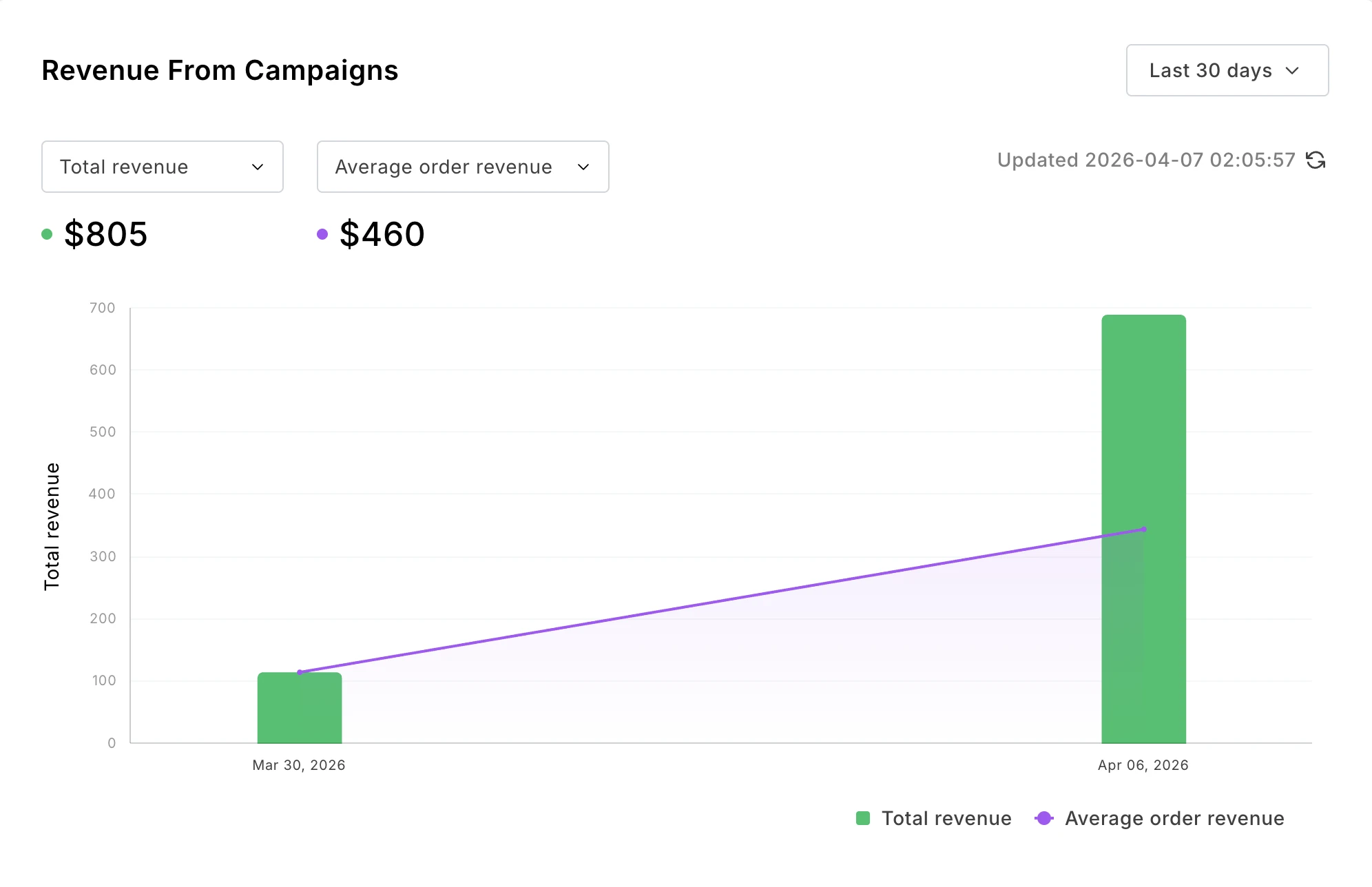
A good way to improve your conversion rate is to track your email marketing metrics to see what results in sales.
With MailerLite’s new custom reporting feature, you can create a report that shows how time, subscriber groups, and content types impact your sales.
Once you have the report set up, you can use the information to build your strategy around the factors that cause people to buy.
3. Use the right number of links
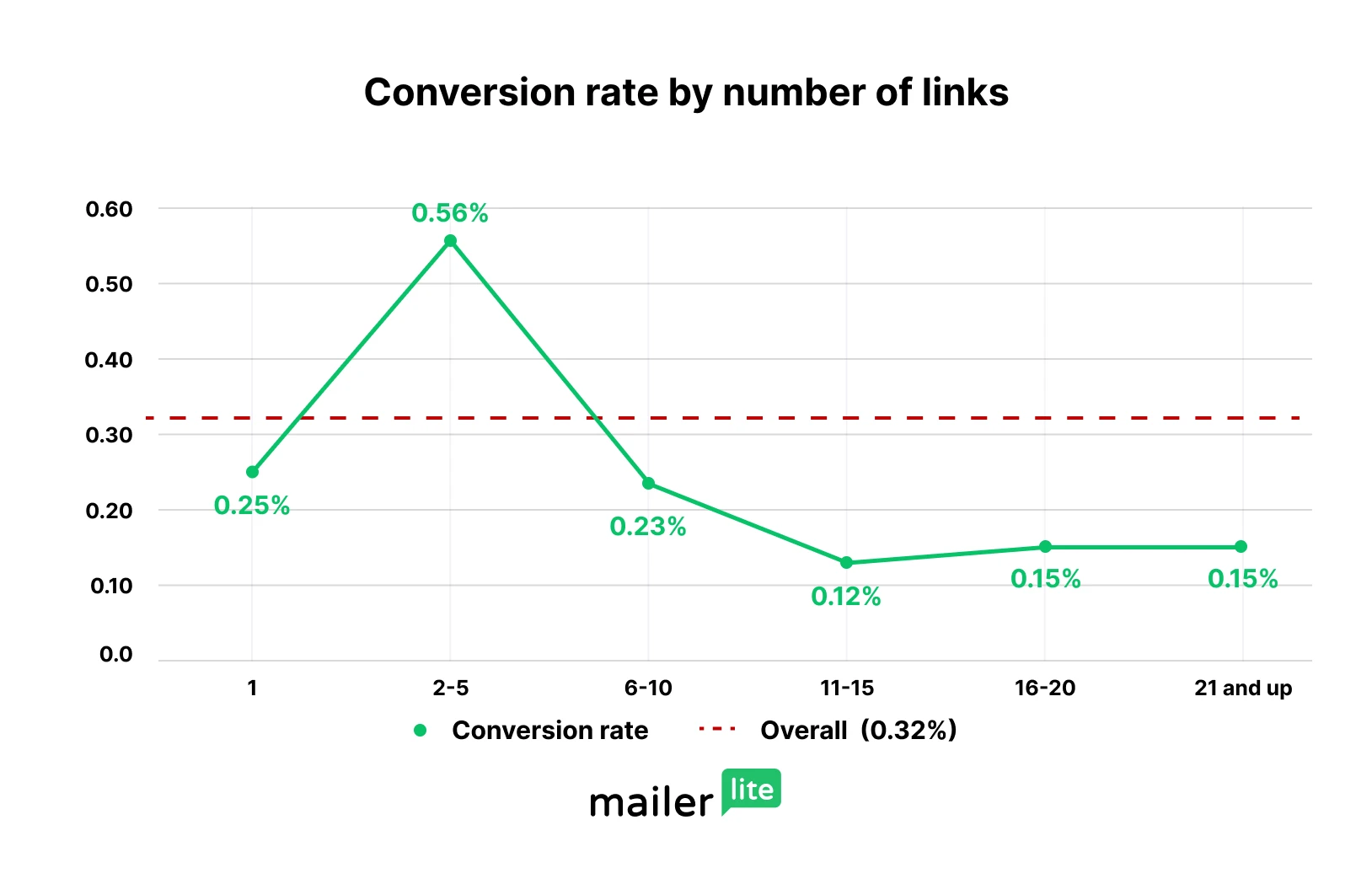
Our data shows that the number of links in your email can have a huge impact on your conversion rate.
Emails that include 2 to 5 links have a conversion rate of 0.56%, more than double the conversion rate of emails with any other number of links.
This is likely because emails with fewer links are often targeted around a specific offer or type of offer.
4. Create the right automations
Since automations have very high conversion rates, creating more automations that go out when a subscriber shows buyer intent can be an effective way to boost sales.
But not every kind of automation is focused on conversions; you need to create the right ones, such as:
Abandoned carts or checkouts: Send a reminder to people who added a product to their cart but never started checkout, or who started checkout but didn't complete the purchase. These people are already close to buying, so the reminder can push them over the line
Welcome emails: People are highly engaged when they join your list. Include a discount coupon or product recommendations in your welcome email to encourage them to buy
Automations based on interest: Send an automated email when someone clicks on a particular link in your email that suggests buying intent. Links to products, categories or offers are good places to start
Upsells and cross-sells: Send relevant promotions to people who have already bought from your store
Purchase milestones: Reward customers every time they hit a set number of purchases, say, every 3rd order. The email fires again at each milestone (3rd, 6th, 9th, and so on), so you can run a loyalty program without having to manage it manually
Reminder emails: Send purchase reminder emails if it's relevant to your product. A supplement seller could send a reminder 3 weeks after someone purchases 4 weeks’ worth of protein
Want to create automations faster? Then start with one of our templates. These are fully customizable templates that you can use to quickly build out more automations. Here are 3 of our favorites for generating conversions.
5. Include content that’s proven to boost conversions
Your email content also plays a big part in how your emails convert. Fortunately, you don’t have to rewrite the book when creating conversion-focused emails. Just include elements that are proven to boost sales.
Social proof: Add testimonials, reviews, star ratings or number of sales
Scarcity: Use limited-time offers or highlight when stock is low
Benefits-focused copy: Focus your messaging on how the product benefits the buyer
Clear offers: Make it clear what every email is promoting
CTAs high up in the email: Include at least one CTA high up in the email so people can see it without scrolling
Get more tips for creating high-converting content in this article.
Final thought: Don’t ignore your current conversion baseline
What’s a good conversion rate for you will come down to many factors, including your product, audience and the types of emails you send.
While the numbers in this article are good guidelines, it’s important to look at your own baselines and then try to improve from there.
A simple starting point: send targeted emails with a single focus to a group of subscribers who are likely to be interested in the offer to see how it performs.
How do the stats in this article compare to your experience with email conversion rates? Let us know in the comments!