Travel email marketing: Selling sunsets, not plane tickets

Travel is back, and it's bigger than ever. According to Deloitte, over 50% of Americans are planning trips during the 2025-2026 holiday season (the biggest surge since the pandemic). Wanderlust has officially returned.
But here's the challenge: everyone's competing for the same bookings, and travelers have more options than they know what to do with.
That's where email marketing becomes your secret weapon. The right email can transport someone to a cobblestone street in Rome, make them taste the street food in Bangkok, or feel the crisp mountain air in the Alps before they've even booked.
In this guide, you'll learn everything about how to build email campaigns that actually convert—from capturing emails with irresistible lead magnets to designing visually stunning newsletters to automating workflows that turn browsers into bookers.
Why email marketing is a travel agency’s best companion
Email marketing does something no other channel can: it puts you in direct contact with people who actually want to hear from you. Unlike social media, where algorithms decide who sees your content, your email list is entirely yours. You control when and how you reach your audience.
When done right, email marketing drives more traffic to your site, nurtures relationships, and turns browsers into bookers. The ROI speaks for itself: email returns $36 for every dollar spent. No other marketing channels come close. 😊
Here's how you can use email marketing to your advantage:
Build trust through consistent engagement: Share travel tips, destination guides, and exclusive offers that make subscribers feel valued
Drive bookings with targeted offers: Send seasonal deals, last-minute travel opportunities, or personalized recommendations based on browsing behavior
Get direct feedback: Use surveys to learn what customers want and what needs improvement
Nurture relationships beyond the sale: Stay top-of-mind with helpful content, turning one-time bookers into repeat travelers
Step-by-step implementation of email marketing for the travel industry
Here’s a practical roadmap to launch email marketing campaigns for your travel business from scratch.
Step 1: Build your email list
Your email list is the driving force behind your travel email marketing campaigns. Building one is straightforward! All you need is a way to collect email addresses—offline or online.
We'll quickly cover how you can gather emails here. If you want a more in-depth guide on how to grow a high-quality email list, we've got an article for that too!

Collect email addresses in person
Sign up people you meet at travel expos, trade shows, or even in your office, using an offline email collection app that works on mobile devices and smartphones. It syncs automatically to your travel list and keeps you GDPR-compliant.
Collect email addresses through your website
To get people to opt-in to your email list via your website, you can use pop-ups and embedded forms.
Pop-ups
Pop-ups work because they interrupt browsing in a way that's hard to ignore. Integrating pop-ups is easy when you use an email tool.
Use them strategically, for example, exit-intent pop-ups when someone's about to leave, or timed pop-ups customized based on the page length. Keep the form short: just an email address and maybe a travel interest.
Embedded forms
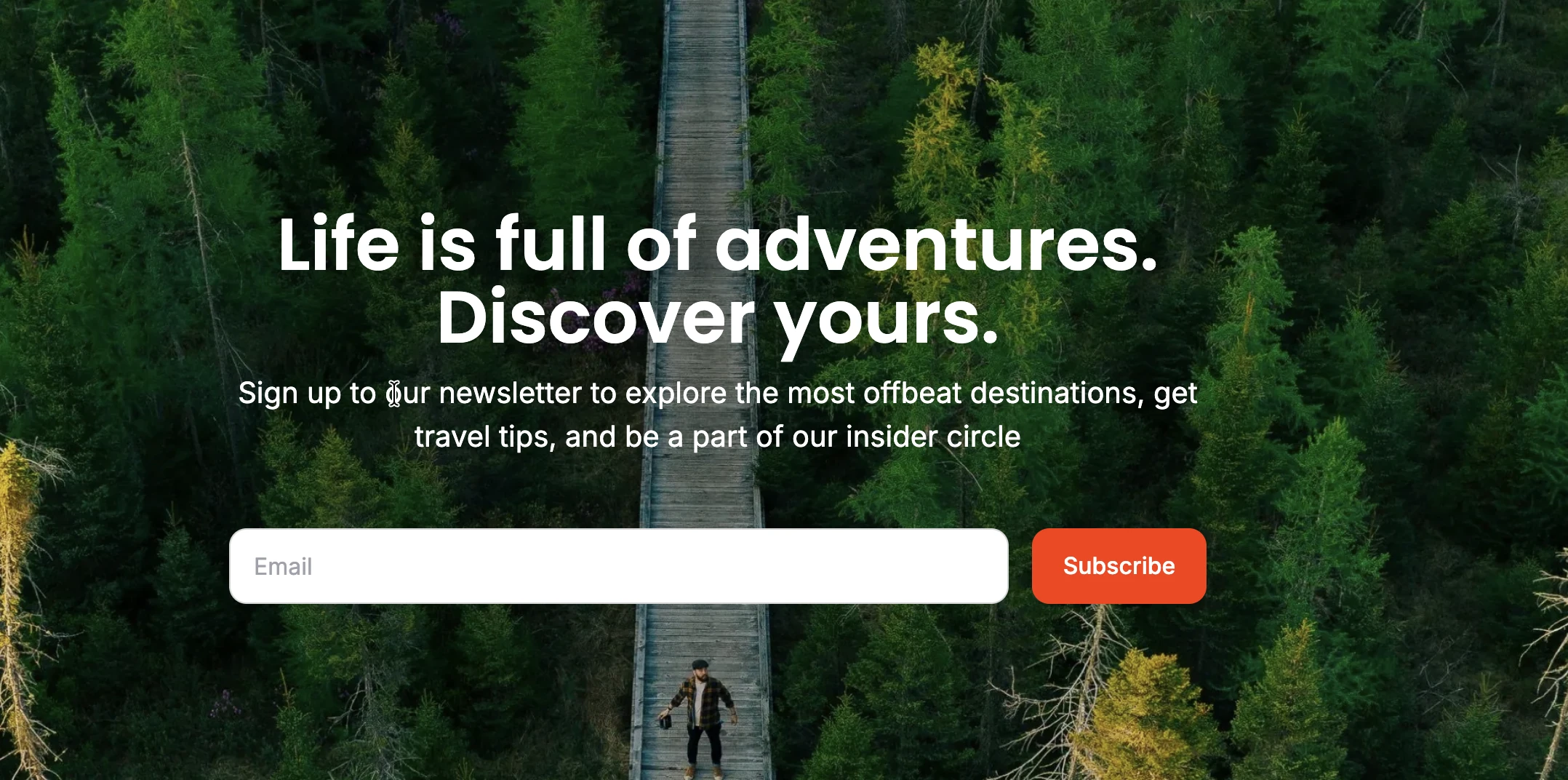
Embedded forms go in your footer, blog sidebar, or at the end of travel guides. This is the signup form Iconic Luxury Hotel uses for people to sign up for their travel agency newsletter.
(Bonus) Incentives: Offer a lead magnet to incentivize people to sign up
Don't just ask for an email; offer something in return. For example:
A 10% discount on their first booking
A downloadable packing checklist
Early access to flash sales
A free destination guide
You can also create a travel landing page to promote a contest or giveaway. In order to participate, people need to sign up. The winner is then announced via email.
(However, do note that though this is a great way to make people sign up quickly, this could lead to many signing up only for the prize.)
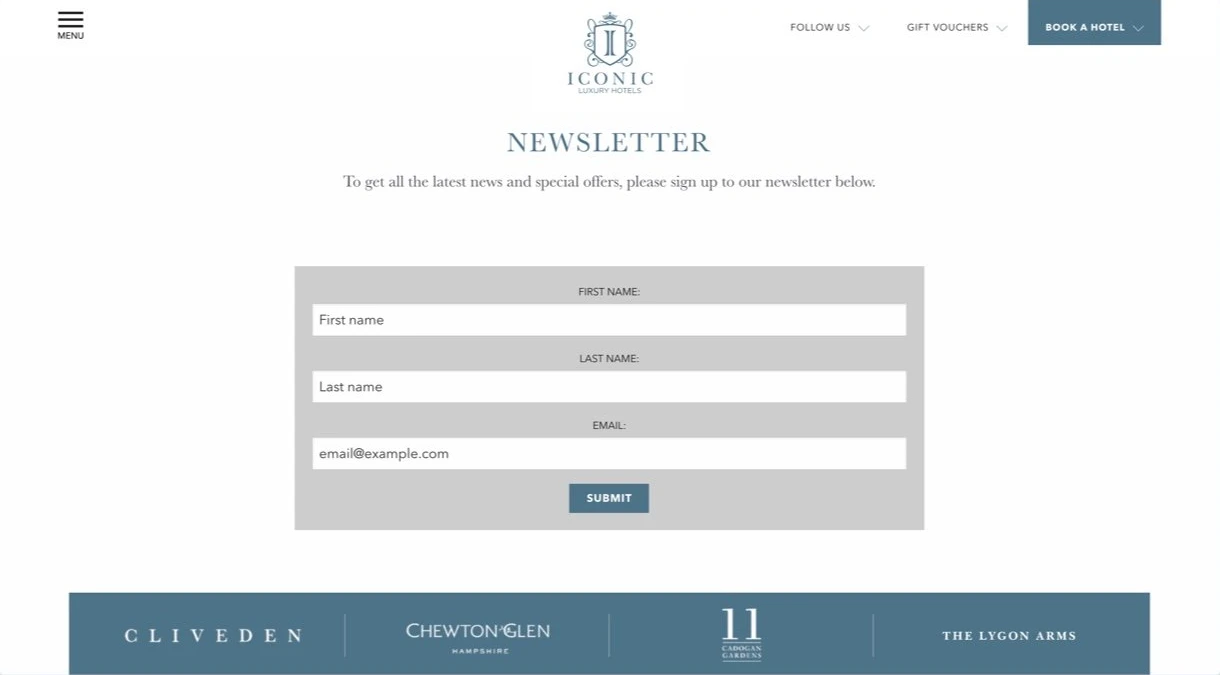
This page from Harrison Beach Hotel shows how website visitors have a chance to win a free 1-night stay (up to a $300 value) by simply subscribing.
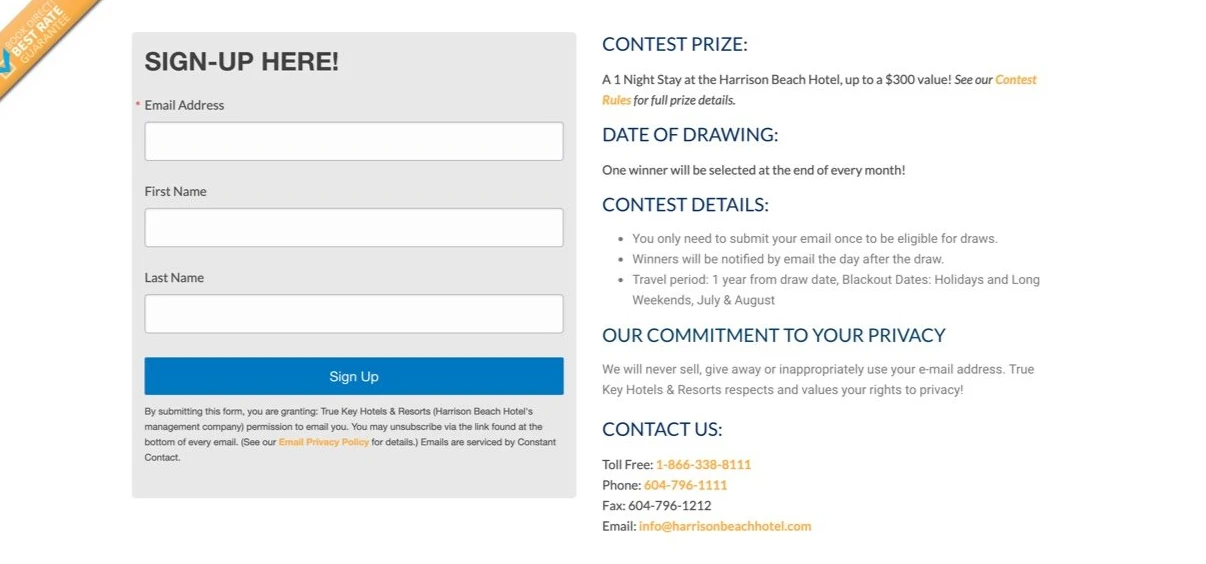
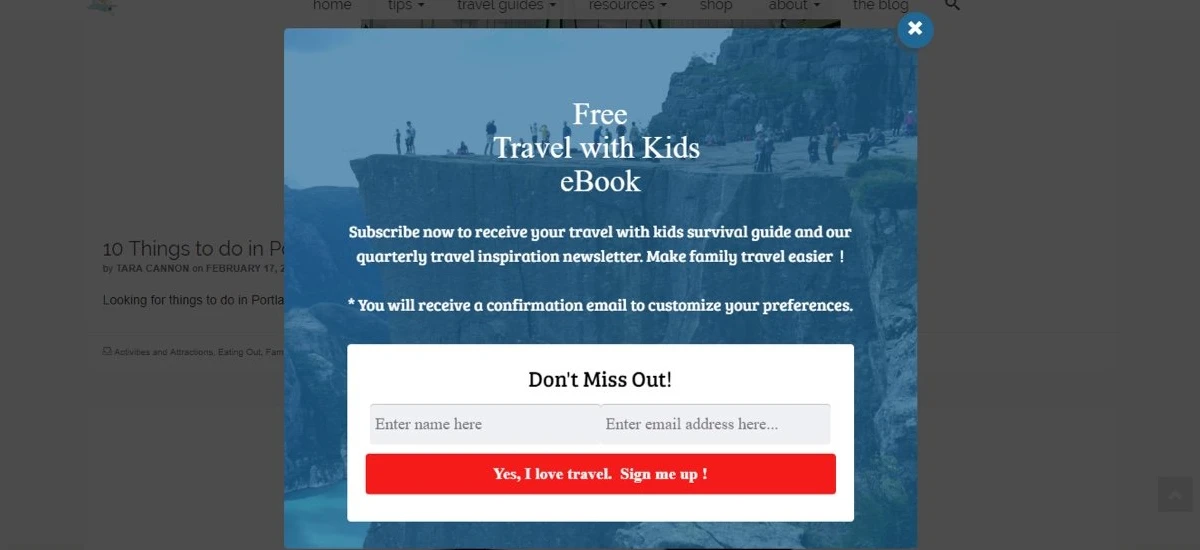
You could also use a lead magnet like a free e-book to collect new subscribers, like the one below:
Step 2: Segment your audience
Not all your subscribers want the same thing. Telling a parent of five about the 'freedom of backpacking' isn’t a great idea. That's where segmentation comes in.
Segmentation lets you organize your email list into smaller groups based on specific criteria such as demographic, location, or engagement level.
These segments help you send the right message to the right person at the right time. This is important as 81% of customers would ignore messages that aren't personalized.
Here are some common ways to segment your travel audience:
By signup channel: If someone subscribed after reading your blog post about family-friendly destinations, they're probably more interested in kid-focused travel content
By customer journey: New subscribers might need a welcome series with destination inspiration, while repeat bookers might appreciate exclusive early-bird deals
By location: Send ski trip promotions to subscribers in warm climates craving snow, or promote tropical beach getaways to people in colder regions during winter
By past purchases: Someone who just booked a beach resort in Thailand might be interested in island-hopping tours or scuba diving add-ons for their trip
By email engagement: Your most active subscribers—the ones who open and click regularly—are the best candidates for referral programs or VIP packages. Less engaged subscribers might need a re-engagement campaign with a compelling offer
By survey or poll results: Send a quick survey asking about travel preferences (beach vs. mountains) and use the responses to tailor future recommendations
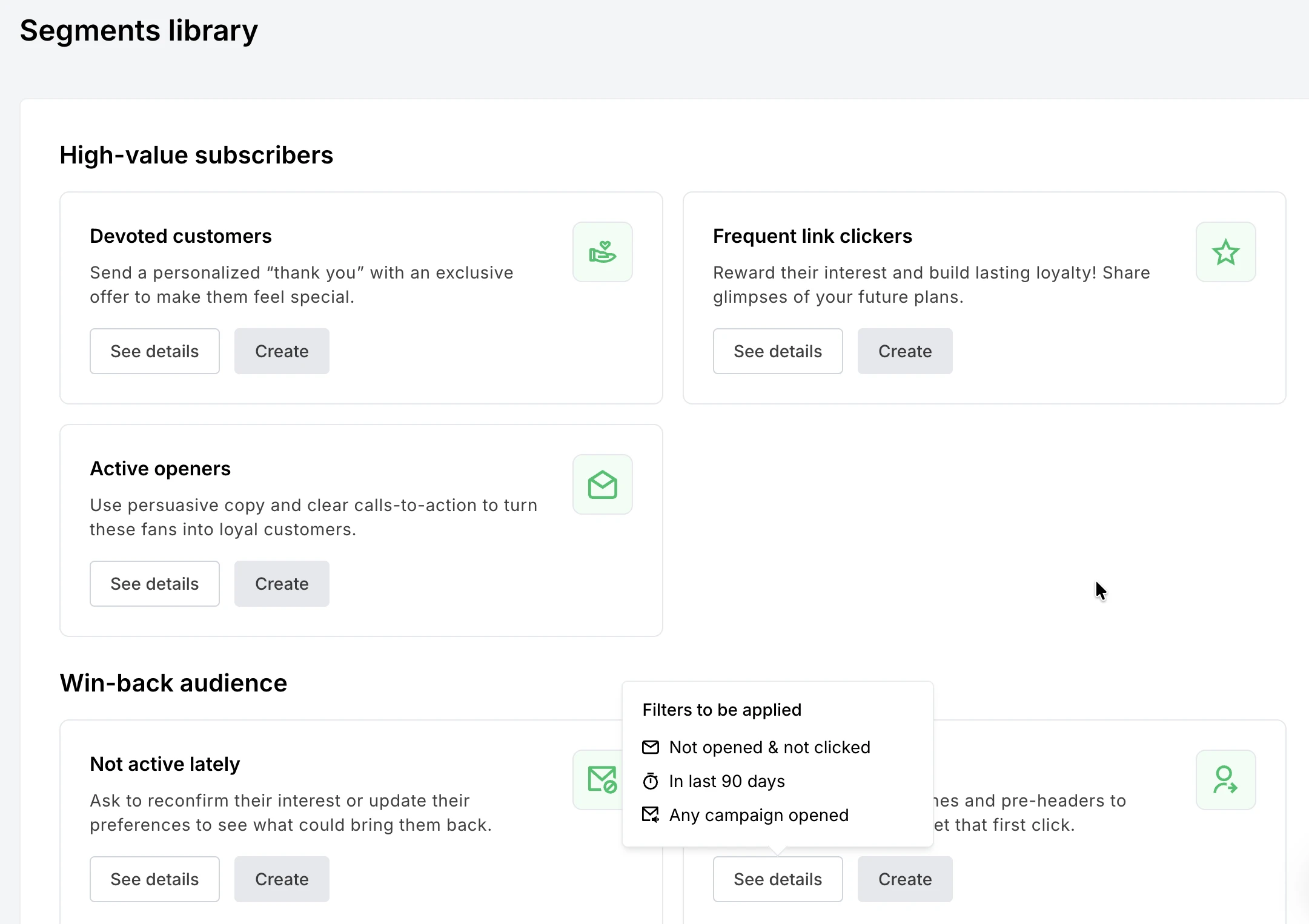
Our Segments library gives you 7 pre-built segments based on click rates, open rates, timezone, and location. You can use these as a starting point and build more segments as you gather data.
Learn more about how to segment your audience on MailerLite.
Create customer personas
Once you've segmented your list, create customer personas, i.e., fictional representations of your ideal customers based on real data. For example:
The solo traveler in her 30s who prioritizes authentic experiences
The retired couple planning their dream European river cruise
The young family looking for kid-friendly resorts with childcare
Each persona has different motivations and pain points. The solo traveler might want insider tips and flexible booking. The retired couple might value comfort and guided experiences. The young family might need reassurance about safety.
When you understand these differences, you can craft email content that speaks directly to what each group cares about.
Step 3: Design visually stunning and mobile-friendly emails that convert
Travel is visual. People don't just want to read about Santorini, they want to see the white cliffside buildings against the blue Aegean Sea.
Lead with high-quality images
Use photos that make someone stop scrolling. A beach at sunset. A street market in Marrakech. A cabin in the Norwegian fjords. The photo should do half the work before they even read a word.
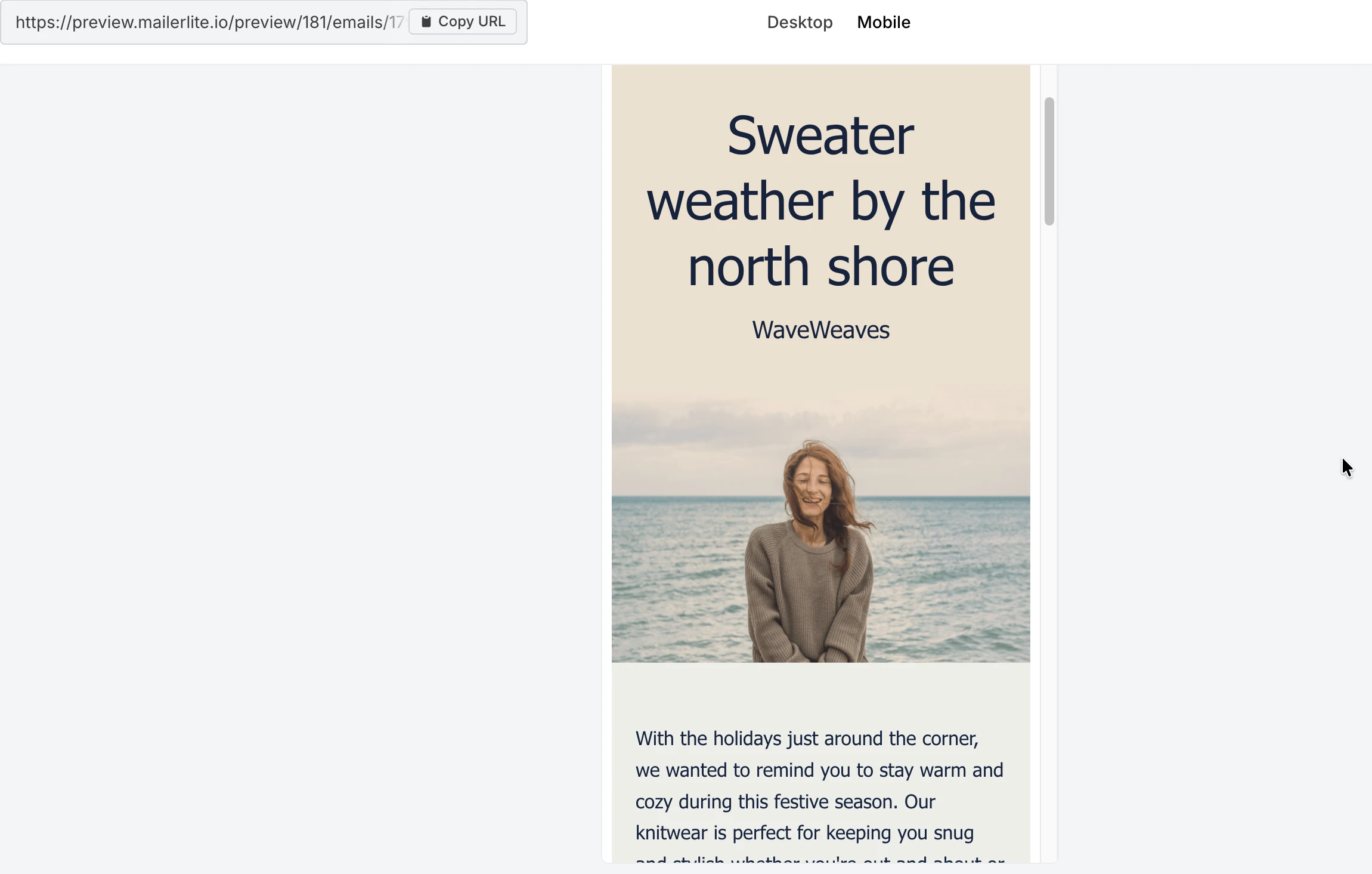
Take a look at this gorgeous travel newsletter template from MailerLite that you could tweak to make your own today! :)

Keep your copy short
Tease the content, don't dump the whole article in the email. "Wondering where to eat in Tokyo? We found 5 spots the locals won't stop talking about." Then link to the full guide on your site.
Make your call-to-action (CTA) impossible to miss
Your CTA should be clear and clickable. For example, "Browse trips to Japan," "Download the guide," or "Claim your discount."
Test on mobile
Most people check their emails on their mobile phones. That’s why you need to make all your travel emails responsive, so users don’t need to pinch and zoom to see your content.
All emails created with MailerLite are responsive and look great on both mobile and desktop. You can check out how your emails look on mobile after you create your campaign by clicking the mobile preview.
💡 Pro tip: Want to design professional-looking travel email newsletters? Check out our ultimate guide:

Step 4: Craft subject lines that get opened
Our 2025 data shows that travel and tourism email open rates crossed 30%, with a click-to-open rate (CTOR) of 6.34%. That CTOR tells you something important: when people open your emails, a lot of them engage.
The opportunity lies in getting them to open in the first place through effective subject lines. Nail your subject lines, and you'll see conversion rates climb.
Here are some great subject line ideas for travel businesses based on email content:
Destination-focused:
The one place everyone's booking for spring (and why)
We can't stop thinking about these hidden coastal towns
This destination just made our must-visit list
Where are people actually going this summer?
Deal-driven:
Your flight alert: Prices dropped for [destination]
These rates won't last—seriously!
We found some special deals for you
The kind of travel deals you screenshot and send to friends
Personalized/engagement:
Your trip reminder (and a few insider tips)
Still thinking about [destination]? Here's what you need to know
Based on your last search, you'll want to see this
You've got rewards sitting in your account
Content/value-led:
The packing mistake everyone makes (and how to avoid it)
8 ways to stretch your travel budget without sacrificing fun
What nobody tells you about traveling solo
The booking hack that saves us hundreds every time
Curiosity/intrigue:
This changed the way we plan trips
Why experienced travelers always do this
The truth about last-minute bookings
One decision that makes or breaks a trip
Seasonal/timely:
Escape the cold? These tropical beaches are perfect!
Summer's filling up fast…here's what's still available
Your winter getaway checklist (before it's too late)
Spring break spots that aren't overcrowded yet
A/B test your subject lines to see what works and what needs tweaking.
Read our guide to learn more about crafting irresistible subject lines.
Step 5: Create content that builds engagement and loyalty
When it comes to email marketing success, the content of your newsletters is crucial to building meaningful customer relationships. Here are ways to craft content that keeps customers coming back for more.
Send personalized content
Segmentation lets you categorize your subscribers based on shared traits so that you can send them tailored messages that resonate. Here are some examples of how you could personalize your email content:
Destination recommendations based on travel history
Pre-trip tips for upcoming bookings
Cross-selling or upselling services complementary to a customer’s bookings
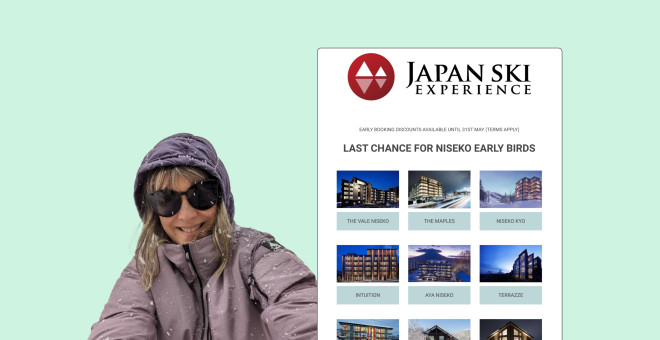
Take a look at how a MailerLite customer, Japan Ski Experience, sends emails about services like airport transfers to customers who've already booked with them.
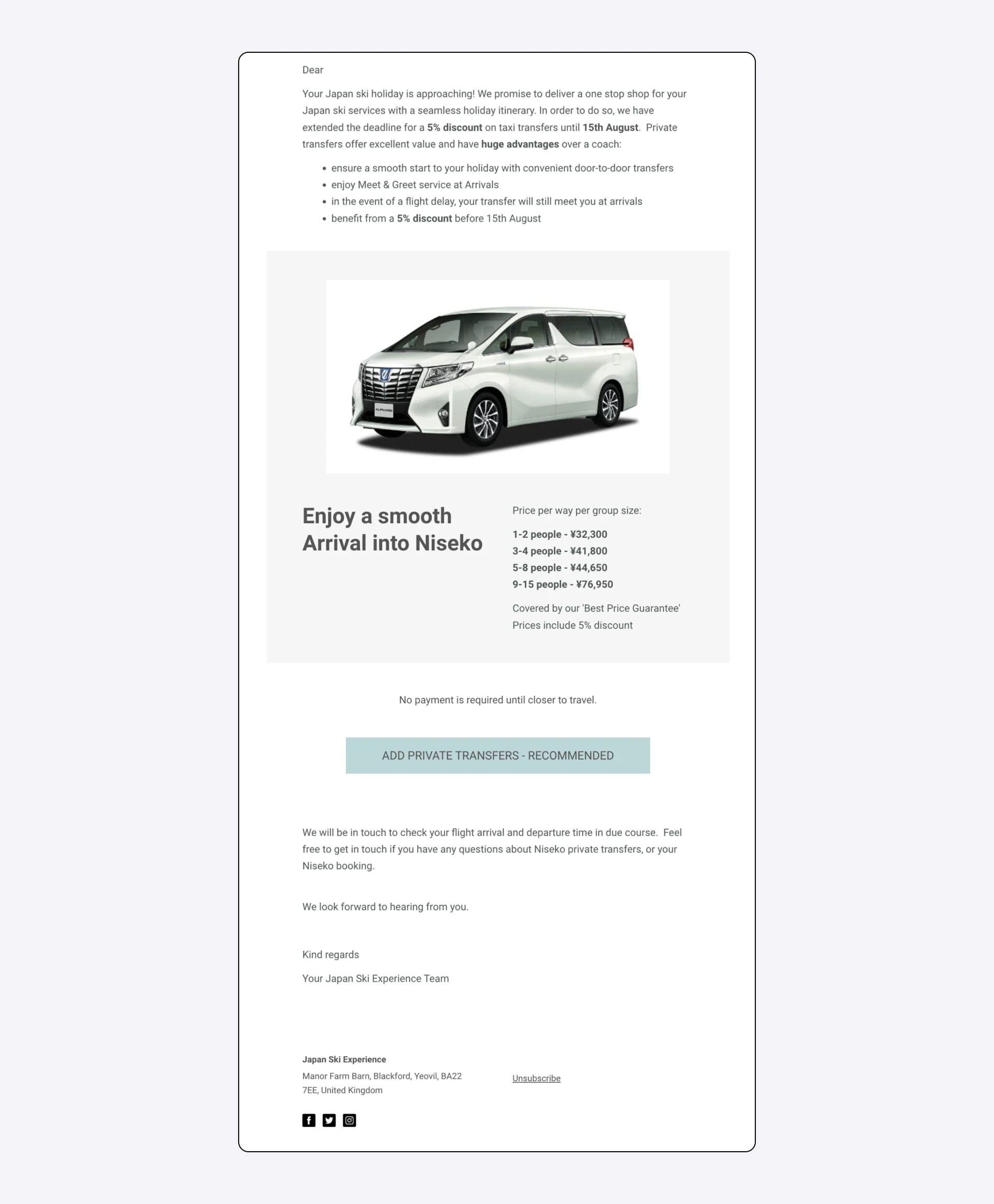
Great idea, right? Learn how Japan Ski Travels uses segmentation and other email marketing strategies to boost sales.
Use imagery that inspires
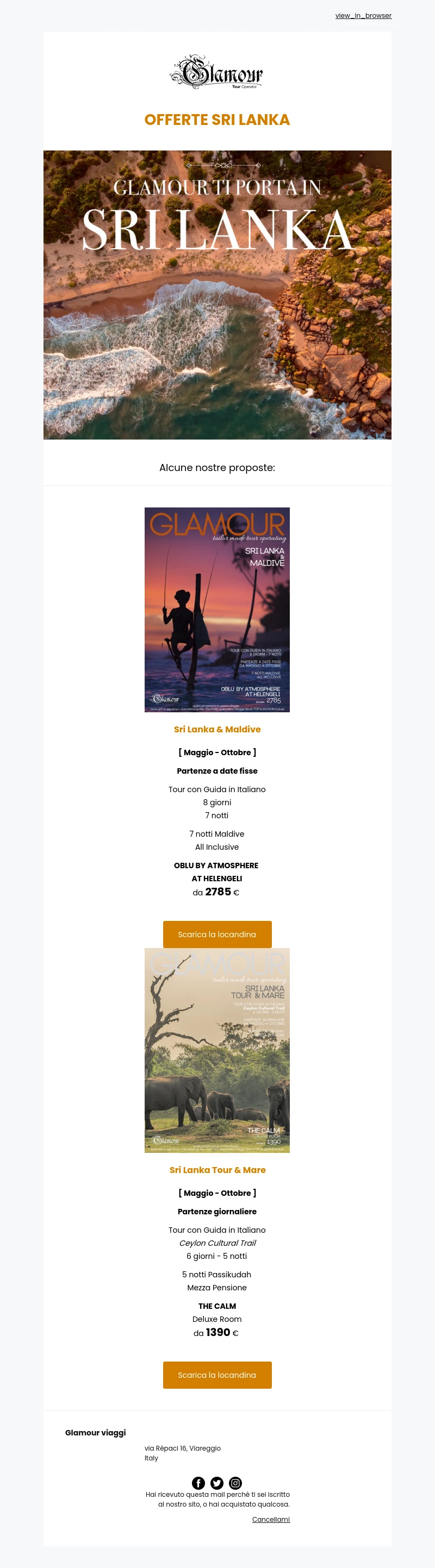
Traveling is about experiences and emotions. Using the right images in your email design can motivate readers to put your offer at the top of their bucket list.
Lead with destination photos that create desire—white-sand beaches, mountain peaks, bustling markets, cozy accommodations like the MailerLite email newsletter template below:
Pro tip: Here’s a detailed guide on how to design professional-looking travel email newsletters:
YOLO! Express urgency in your travel newsletter
Traveling costs money, but you also only have one life to explore the world. Play with this sense of urgency to get people to act.
Use seasonal promotions and limited-time deals to encourage action, for example:
Last-minute getaways to warm destinations in January
Easter family packages
Flash sales for off-season travel
Early-bird discounts for peak season
Combining your promotions with email personalization makes sure your offer is a perfect fit for each of your subscribers.
The Hoxton promotes their limited-time 20% discount and includes “What to tell your boss” excuses that surely gave their readers a good laugh.

Pro tip: Did you know that you can create email coupons with MailerLite? Use them to boost your sales and ramp up engagement with your travel agency.
Share educational content
When you spread your knowledge using travel email marketing, your content stays within the newsletter just for you and your tribe to know. Use this exclusiveness as a USP to attract more subscribers.
Here are things you could share:
Destination guides and hidden gems
Travel hacks and packing tips
Cultural insights and local stories
Debunking travel myths
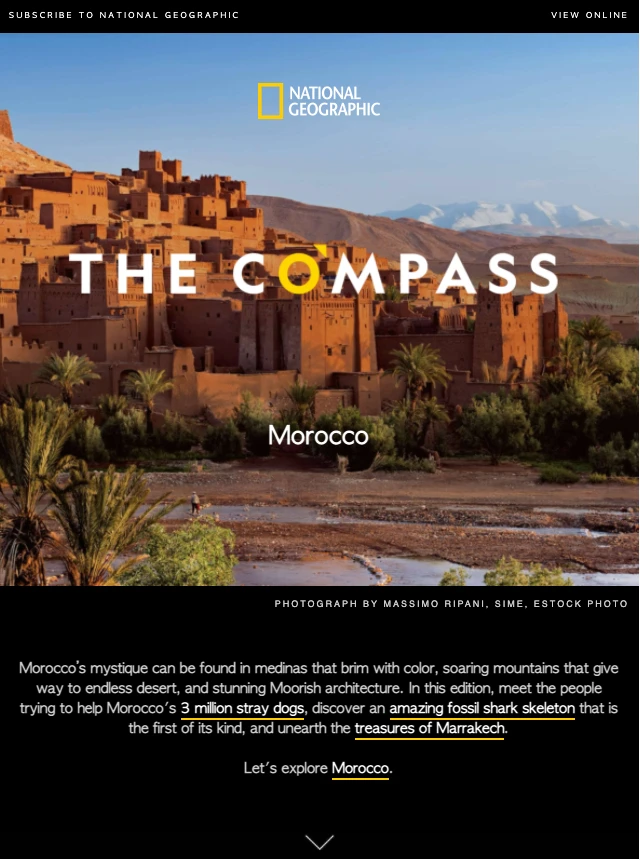
In this travel newsletter, National Geographic teaches readers about Morocco.
Pro tip: If you can package your content in the form of videos, even better, as more people remember messages in video form than reading them.
Read how to create engaging email content in the guide below:

Build community with reviews and stories
People love to get together and talk about their travel experiences. Use this community feeling in your travel email marketing campaigns by sharing:
Customer testimonials
Traveler stories and experiences
User-generated content from social media
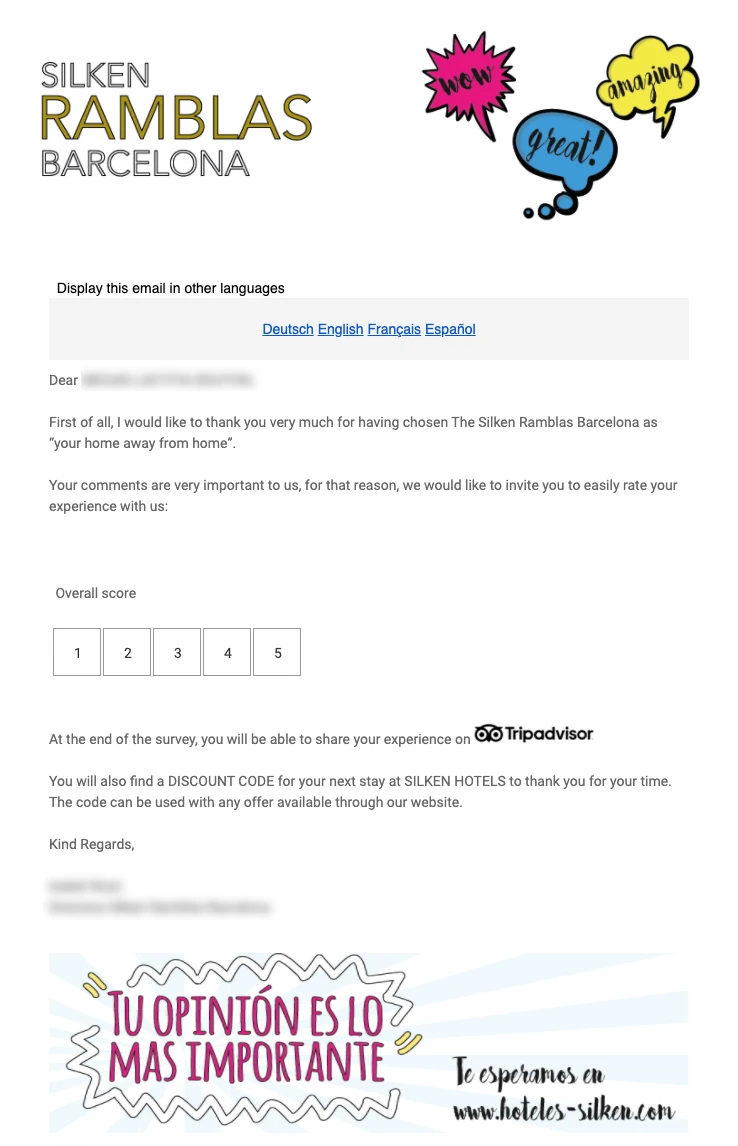
In this personalized email, a hotel in Barcelona makes it super easy for readers to leave reviews. In-email NPS surveys work well to find out how satisfied your customers are.
Let’s get social
Email marketing and social media go together like a good glass of wine and a beautiful sunset. Spread your exposure and encourage people to get social with you. Here are some ways:
Embed social media posts directly in emails
Add social follow buttons to every campaign
Encourage subscribers to share their trips and tag you
Showcase Instagram-worthy destinations
Step 6: Automate your email marketing
Automation handles repetitive tasks so you can focus on strategy and creativity. Here are a few automation workflows suitable for travel companies:
Welcome series
When people sign up for your newsletters, they are primed to hear from you. Welcome emails have an over 60% open rate. Use automation to send them the moment someone subscribes.
Your welcome email should greet your new subscriber and introduce your agency, set expectations for what they'll receive, and include a clear call-to-action.
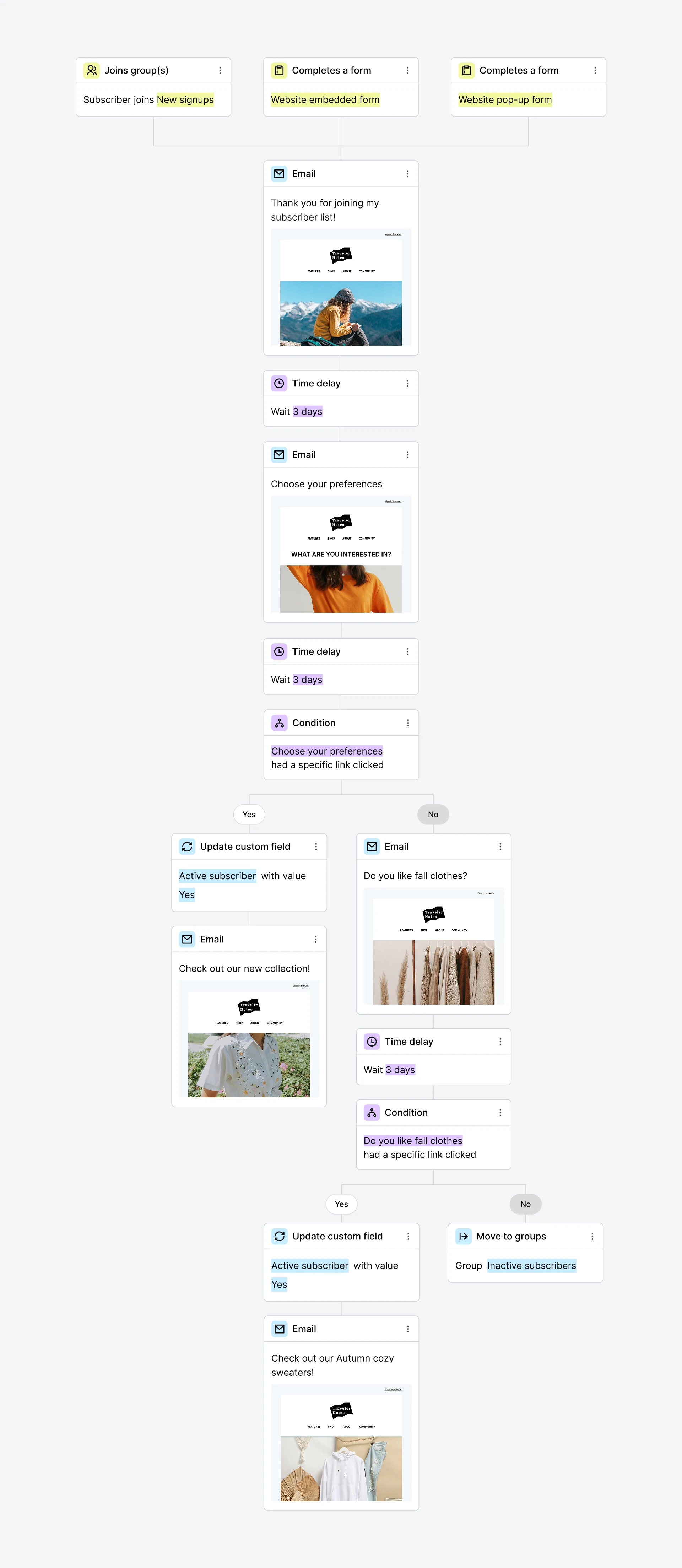
But don't send one email and disappear. Set up a 3-part sequence that triggers when someone subscribes:
Email 1 (immediate): Deliver whatever you promised—the discount, the guide, the packing list
Email 2 (2 days later): Share a destination guide or travel tips to establish credibility
Email 3 (4 days later): Ask a question to segment them. "Are you planning a solo trip or a family vacation?" Use their answer to personalize future emails
Pro tip: Here’s how to set up a welcome email series with MailerLite. 🤓 Use our advanced welcome email template to hit the ground running!
Abandoned cart reminders
An abandoned cart email is an automated message sent to customers who add a product to their cart but leave your website without completing the purchase.
70% of shoppers abandon their shopping cart at some point in their buying journey. That’s a lot of lost sales if you don’t act on that information.
If someone viewed a tour package and didn’t purchase, there’s a good chance they’re interested and might need a little more incentive to complete the purchase.
For example, if someone spent 10 minutes looking at your Peru tour page but didn't book, send a follow-up. "Still thinking about Machu Picchu? Here's what past travelers loved most." Include a testimonial and maybe a packing tip for high-altitude hiking. You could also add a small discount to sweeten the deal.
You can build an abandonment flow from scratch in our automation builder, or use our abandoned cart automation flow template:

Pre-trip sequence: Build excitement and reduce friction
Once someone books, your email strategy shifts from selling to service, and then to retention. Send helpful emails leading up to their trip to make the experience smoother:
30 days before: Share destination-specific tips and weather forecasts. "Visiting Thailand in July? Here's what to pack for monsoon season."
14 days before: Send a packing checklist tailored to their destination and trip type (mountain hiking vs. city exploration). Include visa reminders, vaccination requirements, or travel insurance suggestions, if relevant
3 days before: Send their flight check-in link, transport details from the airport to their accommodation, and any last-minute reminders about local customs or currency
Post-trip follow-up: Turn travelers into advocates
This is where you turn one-time customers into repeat bookers and collect testimonials that help sell future trips:
2 days after they return: Send a warm "Welcome home" email. Ask how their trip was and request a review while the experience is still fresh. "How was Rome? We'd love to hear what you thought."
7 days after: Acknowledge the post-vacation blues and offer a loyalty discount for their next trip. "Missing the beach already? Here's 10% off your next booking."
Re-engagement campaigns
A re-engagement campaign is a targeted email campaign sent to inactive subscribers to regain their interest and encourage them to start interacting with your brand again.
With MailerLite, you can find the segment of your subscribers who haven’t opened or clicked in the last 90 days.
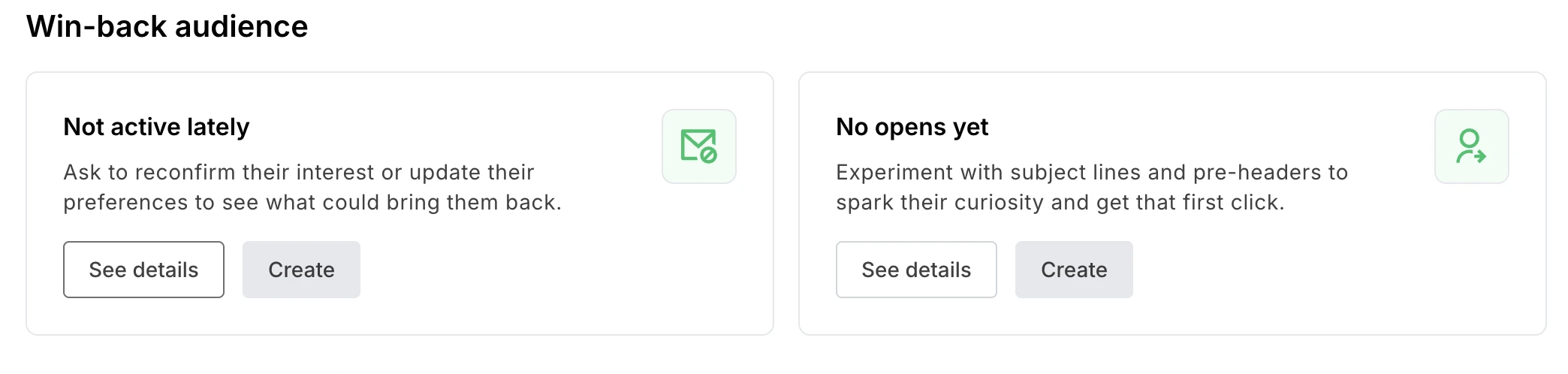
Send them a nudge to ask whether they’d still like to hear from you, or whether their preferences have changed. You could also offer a special deal to engage them.
Here’s a template you could use to re-target inactive subscribers.

Step 6: Analyze and optimize performance
The final step in any successful campaign is to analyze and optimize your performance, as you simply cannot improve what you aren’t measuring.
After every send, dive into your metrics to see if your subject lines are boosting open rates, if your content is driving clicks, and, most importantly, if those emails are actually converting into bookings.
By watching for patterns, such as high-performing destinations or optimal send times, you can use data to refine your future strategy.
Check out our data-backed guide on email cadence to decide the frequency that works for you:

What to look for in an email marketing platform
Your email service provider should handle everything you need in one place:
✅ Pre-built templates designed for travel: Customize templates for destination showcases, booking confirmations, itinerary emails, and promotional campaigns
[Travel newsletter gallery]
✅ Segmentation tools: Organize your list by behavior, preferences, location, engagement, and more
✅ Automation workflows: Set up welcome series, abandoned cart emails, pre-trip reminders, and post-trip follow-ups.
[Check out MailerLite’s automation templates you can use to quickly build an automation workflow.]
✅ Integration with your existing tools: Connect seamlessly with your booking system, CRM, website forms, and other platforms
✅ Analytics that actually help: Track open rates, click rates, and conversions with an easy-to-read dashboard
✅ Responsive design and mobile optimization: Optimize emails for mobile devices
MailerLite offers all of this with a user-friendly interface designed for small and growing travel agencies. You get drag-and-drop email builders, pre-built automation workflows, segmentation tools, and templates you can customize to match your brand.
Email marketing strategy for travel agents: It’s time to fly high!
Travel email marketing works because it taps into something people already want: to explore, to escape, and to experience something new. Your job is to make that desire feel achievable.
By sending engaging, personalized, and valuable content, you turn subscribers with wanderlust into loyal customers who trust your expertise and book your offers.
Now go out there, find new travel followers, and don't forget to enjoy the ride!
Create your first travel email campaign in minutes!
Our free plan includes email marketing automation, landing pages and more amazing features.